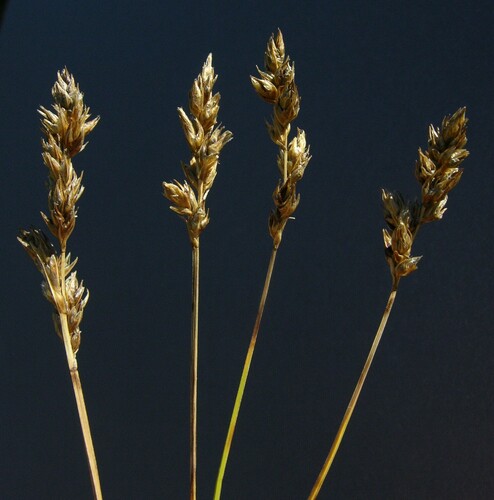
field sedge
Carex praegracilis
The resilient 'expressway sedge' that transforms highways and backyards alike into lush, emerald meadows. A favorite for sustainable gardeners and local wildlife, this hardy plant thrives where others falter.
Quick Identification
Size
Stems typically reach 15–90 cm (6–36 inches) in height; individual leaf blades are roughly 2–4 mm wide.
Colors
Deep emerald green foliage often turning golden-brown in autumn; flowering spikes are light to dark brown.
Key Features
- Triangular stems typical of the sedge family
- Creeping rhizome root system that forms dense mats
- Clustered, brownish flower spikes at the tip of stems
- Narrow, grass-like leaves that arch gracefully
When You’ll See Them
Geographic range
Where Does the field sedge Live?
Native to the North American continent, the field sedge boasts an expansive range that stretches from the Yukon Territory in Canada down through the United States and into central Mexico. It is most prevalent in the western and central regions of the U.S., thriving in diverse environments from coastal dunes to high-altitude mountain meadows. While less common in the deep Southeast, it has been introduced to various regions for land restoration and urban xeriscaping.
Basemap © OpenStreetMap contributors
Behavior
Field sedge is a resilient, perennial plant that spreads primarily through an underground network of rhizomes rather than just seeds. This growth habit allows it to form thick, sod-like colonies that are excellent at outcompeting weeds and stabilizing soil. Unlike many ornamental grasses that grow in isolated clumps, field sedge creates a continuous carpet of green, which has led to its increasing popularity as a sustainable, low-mow lawn alternative.
In the wild, this species plays a vital role in local ecosystems by providing nesting material and cover for small mammals and ground-nesting birds. It is remarkably tough, capable of withstanding heavy foot traffic and even high levels of soil salinity, which is why it is frequently seen growing along highway shoulders—earning it the nickname 'expressway sedge.' While it thrives in moist meadows, it is surprisingly drought-tolerant once established.
EverydayEarth exclusive
Camera Tips
Capturing the beauty of field sedge with a trail or backyard camera requires a focus on movement and texture. Because this species forms a 'meadow' look, position your camera at a low 'worm's-eye view' (about 5-10 inches off the ground) to capture the wind swaying through the blades. This perspective also makes it more likely to trigger when small mammals like rabbits or voles move through the sedge 'tunnels.'
If your camera has a time-lapse mode, field sedge is an excellent subject for a seasonal study. Mount the camera to a sturdy stake and set it to take one photo every day at noon. Over several months, you will see the dramatic transition from the bright green shoots of spring to the brownish seed heads of mid-summer and the golden dormancy of winter.
For those interested in insects, field sedge acts as a host for various butterfly larvae. Use a camera with a high-trigger speed and a close-focus lens if available. Aim the camera at the flower spikes (the brown tips) during the late morning hours when pollinators are most active. Ensure the area behind the sedge is clear to avoid 'false triggers' from background trees moving in the wind, which can be a common issue when filming fine-bladed plants.
Similar Species
Species that look similar or are commonly confused with field sedge.
Frequently Asked Questions
Record field sedge at your habitat
Connect a camera to start building your own species record — AI identifies every visitor automatically.