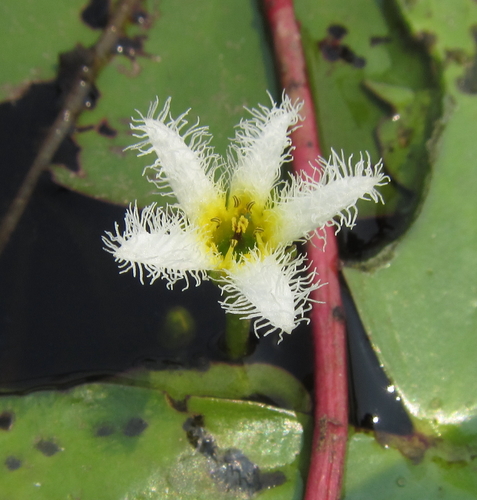
Floating Heart
Nymphoides senegalensis
Floating Heart is a master of the wetlands, gracing African waters with its delicate, fringed white blossoms and iconic heart-shaped foliage. This resilient aquatic plant creates a thriving ecosystem for backyard pond life.
Quick Identification
Size
Leaves 5-15 cm (2-6 inches) in diameter; flowers 1.5-2.5 cm (0.6-1 inch) across
Colors
Lush green leaves often with purple-maroon undersides; brilliant white flowers with a yellow central throat
Key Features
- Delicate white petals with a distinct fringed or 'hairy' edge
- Floating heart-shaped leaves with a deep V-shaped notch at the base
- Flowers emerge from the leaf petiole just below the water surface
- Dense, mat-forming growth habit
When You’ll See Them
Geographic range
Where Does the Floating Heart Live?
The Floating Heart is native to the African continent, with its primary distribution concentrated across West and Central Africa. It is commonly found in the tropical wetlands stretching from Senegal and Gambia through Mali and Nigeria, extending into parts of Chad and Cameroon. While largely a regional specialist of the African Sahel and savanna zones, it is occasionally cultivated in botanical collections and water gardens in other tropical regions.
Basemap © OpenStreetMap contributors
Behavior
A fascinating aspect of its behavior is the ephemeral nature of its blooms. Individual flowers typically open shortly after sunrise, responding to the warmth of the day, and begin to wilt by late afternoon. This daily cycle of blooming and closing ensures a constant succession of fresh flowers throughout the peak growing season, attracting various pollinators like bees and hoverflies during their brief opening window.
EverydayEarth exclusive
Camera Tips
To capture the stunning detail of the Floating Heart, mount your AI-powered camera on a low-profile stake or tripod at the water's edge. A 'frog’s-eye view'—positioning the lens just inches above the water level—creates a dramatic perspective that highlights the unique fringed texture of the petals. Avoid pointing the camera directly into the sun; instead, position it so the morning light hits the flowers from the side to emphasize their delicate, hair-like structures.
Time-lapse is the most effective way to document this species. Set your camera to trigger every 5 minutes between 7 AM and 11 AM. This will allow you to see the rapid 'waking up' process as the buds emerge and unfurl into full blooms. If your camera supports macro focusing, use it; the fine details on the petals of Nymphoides senegalensis are its most distinguishing feature and are often missed by standard wide-angle shots.
Because water surfaces are highly reflective, glare can ruin your shots and confuse AI identification. If possible, use a circular polarizing filter over your camera lens to cut through reflections. This not only makes the white flowers pop against the green leaves but can also reveal the submerged stems and roots where small fish and aquatic larvae often congregate. During the rainy season, try to capture the plant just after a shower; water droplets beading on the waxy, heart-shaped leaves provide a classic, high-quality nature photography aesthetic.
Similar Species
Species that look similar or are commonly confused with Floating Heart.
Frequently Asked Questions
Record Floating Heart at your habitat
Connect a camera to start building your own species record — AI identifies every visitor automatically.