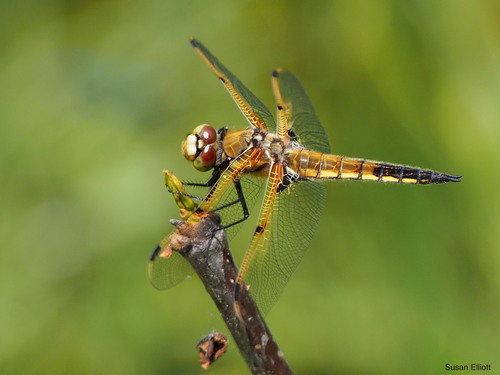
Four-spotted Skimmer
Libellula quadrimaculata
A golden-brown sentinel of the wetlands, the Four-spotted Skimmer is easily identified by the unique dark 'thumbprints' on its wings. This master of the air is a prized sight for backyard naturalists and a natural guardian against garden pests.
Quick Identification
Size
Length: 40–48 mm (1.6–1.9 in); Wingspan: 70–80 mm (2.8–3.1 in)
Colors
Golden-brown to olive thorax and abdomen; distinctive dark brown spots at the nodus (mid-wing) and base of each wing; dark-tipped abdomen.
Key Features
- Two dark spots on the leading edge of each wing (eight total across all four wings)
- Broad, tapered abdomen with yellow lateral markings
- Dense hair on the thorax giving a fuzzy appearance
When You’ll See Them
Behavior
The Four-spotted Skimmer is a classic "percher" dragonfly, characterized by its habit of sitting on a prominent twig or reed and darting out to intercept passing prey or defend its territory. Unlike some dragonflies that spend hours on the wing, this species prefers to return to the same specific lookout point repeatedly, making them excellent subjects for observation.
These dragonflies are highly territorial and known for their aggressive aerial dogfights with rival males. Despite their feisty nature toward other insects, they are completely harmless to humans and are often quite bold, allowing observers to get relatively close. They are also famous for their mass migrations; occasionally, thousands will move together in response to changing environmental conditions or population booms.
EverydayEarth exclusive
Camera Tips
To capture high-quality images of a Four-spotted Skimmer, you don't necessarily need to chase them. Because they are habitual perchers, the best strategy is to identify their favorite 'sentinel post.' Look for upright reeds, dried sticks, or garden stakes near the edge of a pond. Once you see a skimmer return to the same spot twice, that is where you should aim your camera. Position your AI-powered camera or tripod-mounted setup about 2 to 4 feet away from the perch to allow for a clear macro focus without spooking the insect.
Lighting is crucial for iridescent insects. Try to position your camera so the sun is behind you or hitting the dragonfly from the side. This 'side-lighting' highlights the intricate vein patterns in the wings and the golden hairs on the thorax. If your camera allows for manual settings, use a fast shutter speed (at least 1/1000s) to freeze the motion of their wings during takeoff, or use a high-frame-rate video mode to capture the incredible mechanics of their four-winged flight in slow motion.
If you don't have a natural pond, you can lure Four-spotted Skimmers into your camera's field of view by placing a 'perch' (a 3-foot bamboo stake or a decorative garden ornament) in a sunny, wind-sheltered spot near a water feature. They prefer perches that are higher than the surrounding vegetation, giving them a 360-degree view of their hunting grounds. Mid-morning is the ideal time to set up, as they are most active when the sun has warmed their flight muscles but before the heat of the afternoon sends them into the shade.
Similar Species
Species that look similar or are commonly confused with Four-spotted Skimmer.
Frequently Asked Questions
Record Four-spotted Skimmer at your habitat
Connect a camera to start building your own species record — AI identifies every visitor automatically.