fox sedge
Carex vulpinoidea
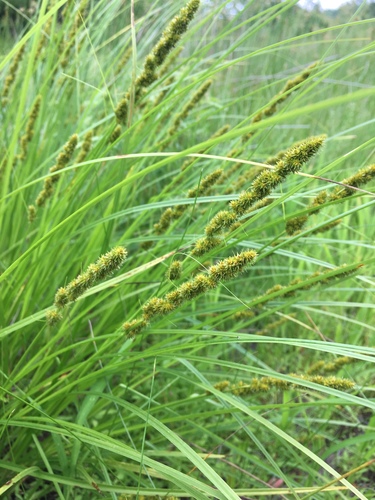
With its signature bristly seed heads that resemble a bushy fox's tail, Fox Sedge is a cornerstone of the backyard wetland. This hardy native perennial provides vital shelter for amphibians and a feast for foraging birds.
Quick Identification
Size
Height: 30–100 cm (1–3 ft); Spread: 30–60 cm (12–24 in)
Colors
Bright green leaves; seed heads transition from pale green to a tawny, rusty brown
Key Features
- Triangular stems typical of sedges
- Bristly, fox-tail-like seed heads up to 4 inches long
- Clump-forming (tussock) growth habit
- Long, arching leaves that often overtop the flower spikes
- Thrives in wet or poorly drained soil
When You’ll See Them
Behavior
In the backyard ecosystem, Fox Sedge acts as a nursery. Its thick, arching blades create a humid microclimate at the base, which is essential for the survival of amphibians like American Toads and various species of meadow frogs. During the mid-summer months, the plant focuses its energy on seed production, creating the iconic 'fox tail' spikes that give it its name.
As a 'workhorse' plant, it is remarkably resilient to human interference and environmental stress. It can tolerate periods of standing water as well as temporary summer droughts, making it a frequent colonizer of roadside ditches and suburban drainage areas. Its presence often indicates a healthy, moisture-rich environment capable of supporting a high diversity of insect and bird life.
EverydayEarth exclusive
Camera Tips
Capturing the beauty of Fox Sedge with a trail camera requires a different strategy than tracking moving animals. To get the best results, position your camera on a low-profile ground stake or a short tripod, aiming the lens about 12 to 18 inches off the ground. This 'frog’s-eye view' allows you to capture the intricate texture of the fox-tail seed heads against the sky or the surrounding garden. Because the plant moves in the wind, ensure your camera is set to a high shutter speed or 'Fast' PIR sensitivity to avoid blurred images of the swaying foliage.
Since Fox Sedge is a magnet for wildlife, it makes an excellent 'bait station' for your camera without using actual food. Place your camera facing a clump of Fox Sedge near a water source like a birdbath or pond. You are likely to capture birds like Swamp Sparrows or Mallards foraging for seeds, as well as various insects and amphibians seeking shade. If your camera has a macro or close-up focus setting, use it to highlight the bristly texture of the inflorescence during the peak of summer when the seeds turn their characteristic rusty brown.
For a unique perspective, try using the time-lapse mode on your AI-powered camera. Set it to take a photo once every hour during the spring growing season (April to June). When played back, you’ll see the dramatic 'fountain' effect as the leaves erupt from the center of the clump. During the winter, don't move the camera; the dried, golden-brown stalks of Fox Sedge provide excellent contrast against the snow and continue to attract small birds looking for leftover seeds, offering great winter footage when other plants have withered away.
Similar Species
Species that look similar or are commonly confused with fox sedge.
Frequently Asked Questions
Record fox sedge at your habitat
Connect a camera to start building your own species record — AI identifies every visitor automatically.