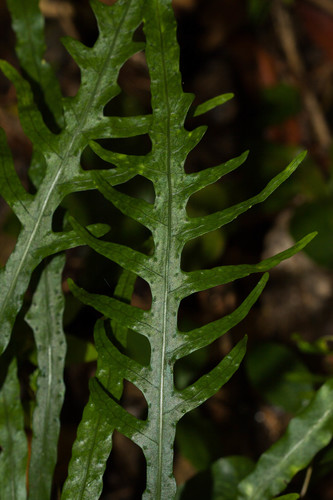
Fragrant Fern
Microsorum scandens
The Fragrant Fern is a climbing marvel of the southern hemisphere, known for its sweet, musky scent and its ability to turn tree trunks into vertical emerald gardens.
Quick Identification
Size
Fronds typically reach 10–50 cm (4–20 inches) in length, with slender creeping rhizomes 2–4 mm (0.1–0.15 inches) in diameter.
Colors
Deep glossy green to mid-green fronds; rhizomes are covered in dark brown to blackish scales.
Key Features
- Climbing habit with long, slender, scaly rhizomes that 'scramble' up trees or rocks
- Thin, membranous fronds that vary from simple straps to deeply lobed shapes
- Distinct sweet, musky fragrance released when the fronds are crushed or dried
When You’ll See Them
Behavior
The Fragrant Fern, also known by its Māori name mokimoki, is a versatile climber that utilizes long, wiry rhizomes to scale the trunks of trees or spread across damp rock faces. Unlike many ferns that grow in discrete clumps, this species is a 'wanderer,' often forming lush, green tapestries over its substrate. It is particularly known for its phenotypic plasticity, meaning its leaves can look quite different depending on the age of the plant; young fronds are usually simple and narrow, while mature ones become deeply divided into lobes.
Historically and culturally, this fern is highly valued for its aromatic properties. In New Zealand, the fronds were traditionally used by Māori to scent oils, such as those derived from the seeds of the titoki tree. In the wild, it acts as an important structural component of the forest understory, providing micro-habitats for small invertebrates and helping to retain moisture on the surfaces of host trees.
EverydayEarth exclusive
Camera Tips
To capture the Fragrant Fern effectively with an AI-powered trail camera, you should focus on its unique climbing growth habit. Place your camera 3 to 5 feet off the ground, aimed toward a tree trunk or mossy rock face where the fern is actively scaling. Because these ferns are stationary, they provide an excellent opportunity to experiment with high-resolution 'Time-Lapse' modes. Setting your camera to take a photo once every few days over several months can reveal the fascinating way the rhizomes 'crawl' and new fronds unfurl.
Lighting is your biggest challenge in the dense, shaded forests where this fern thrives. If your camera allows for exposure adjustment, slightly overexpose the shot to bring out the detail in the dark brown, scaly rhizomes against the dark bark of the host tree. Avoid using a heavy flash at close range, as the glossy surface of the fronds can cause 'hot spots' or glare that obscures the delicate venation of the leaves. Natural, diffused light on an overcast day provides the best saturation for its deep green hues.
For those using AI cameras to track biodiversity, position the lens to include both the simple juvenile fronds and the lobed adult fronds in the same frame. This helps the AI (and you!) distinguish it from similar-looking species. If you are placing the camera in a backyard garden setting, ensure the fern is located in a high-humidity spot near a water feature or under a thick canopy, as the plant will look its most 'photogenic' and vibrant when it is well-hydrated.
Similar Species
Species that look similar or are commonly confused with Fragrant Fern.
Frequently Asked Questions
Record Fragrant Fern at your habitat
Connect a camera to start building your own species record — AI identifies every visitor automatically.