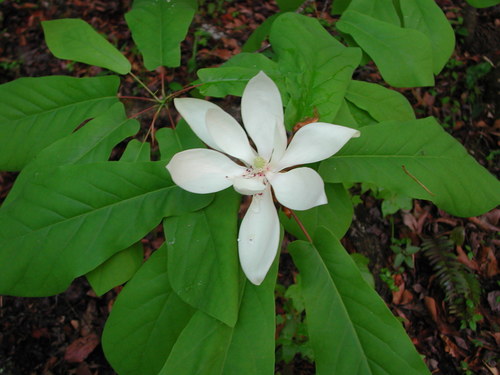
Fraser Magnolia
Magnolia fraseri
A crown jewel of the Appalachian mountains, the Fraser Magnolia dazzles with its massive tropical leaves and fragrant, plate-sized blossoms.
Quick Identification
Size
Height of 30-50 ft (9-15 m); leaves 8-20 inches (20-50 cm) long; flowers 8-10 inches (20-25 cm) wide
Colors
Bright green leaves with silvery-green undersides; creamy white to pale yellow flowers; smooth gray-brown bark; bright red cone-like fruit
Key Features
- Distinctive ear-shaped lobes at the leaf base (auriculate)
- Large, fragrant creamy-white flowers with 6-9 petals
- Smooth, thin, grayish-brown bark that remains relatively un-fissured
- Cone-like seed clusters that turn bright red or pink in late summer
When You’ll See Them
Behavior
The Fraser Magnolia is a charismatic deciduous tree that serves as a cornerstone species of the Southern Appalachian cove forests. Unlike many stiff, formal magnolias, the Fraser Magnolia has a somewhat more open, airy structure with branches that often sweep upward. It is a fast-growing species that thrives in the cool, moist, and well-drained soils of mountain slopes, often acting as a beautiful understory or mid-canopy tree that brings a tropical appearance to temperate forests.
Ecologically, the tree plays a vital role in its habitat. In late spring, its massive, sweet-smelling blossoms act as a beacon for ancient pollinators, specifically beetles, which were the primary pollinators of magnolias long before bees evolved. In the late summer and autumn, the tree transitions from a floral showpiece to a high-energy buffet. Its vibrant red seed pods burst open to reveal seeds coated in a fatty, nutritious layer that provides essential fuel for migrating birds and resident mammals preparing for winter.
EverydayEarth exclusive
Camera Tips
To capture the majesty of a Fraser Magnolia, your primary focus should be on the blooming cycle in late spring. Place your camera on a sturdy tripod or a neighboring tree, angled slightly upward into the canopy where the large, creamy-white flowers congregate. Because these flowers are highly reflective, use a camera with a high dynamic range or manual exposure settings to ensure the white petals aren't 'blown out' in direct sunlight. Time-lapse mode is particularly rewarding here, as you can capture the dramatic opening of the massive buds over a 24-48 hour period.
For wildlife enthusiasts, the 'money shot' happens in late summer when the seed cones (follicles) ripen to a brilliant red. Mount your camera 5-10 feet away from a cluster of ripening cones. This is the best time to catch behavioral footage of Red Squirrels, Chipmunks, and a variety of songbirds like Kingbirds and Wood Thrushes that are attracted to the bright red, oil-rich seeds. Use a fast trigger speed, as these visitors often zip in and out quickly to grab a seed before retreating to a safe branch.
If you are using an AI-powered camera like the ones we support at EverydayEarth, position your lens to capture the unique 'ear-leaf' shape against a contrasting background. This helps the AI identification software distinguish it from other magnolias. During the winter, the tree's smooth gray bark and large, hairless terminal buds provide excellent architectural interest. For best results year-round, ensure the lens is clean of the sticky resin that Fraser Magnolias occasionally drip from their buds and stems, which can smudge your footage during the warmer months.
Similar Species
Species that look similar or are commonly confused with Fraser Magnolia.
Frequently Asked Questions
Record Fraser Magnolia at your habitat
Connect a camera to start building your own species record — AI identifies every visitor automatically.