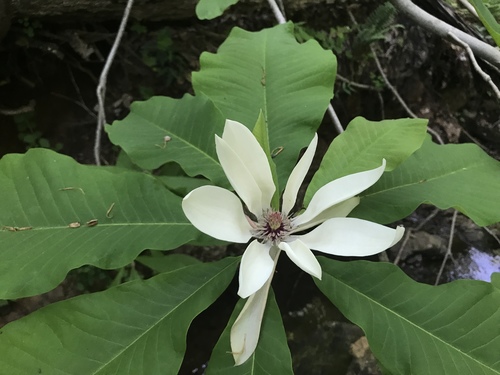
umbrella magnolia
Magnolia tripetala
With its dramatic, oversized leaves and exotic-looking blooms, the Umbrella Magnolia brings a touch of the prehistoric to your backyard. This Appalachian native is a master of the shade, providing a lush haven for birds and pollinators alike.
Quick Identification
Size
A medium-sized understory tree reaching 15–30 feet (4.5–9 meters) in height with leaves measuring 12–24 inches (30–60 cm) long.
Colors
Lush green leaves with a paler underside; creamy-white flowers; mature fruit is a vibrant rosy-pink to red.
Key Features
- Massive leaves clustered at the ends of branches in an umbrella-like whorl
- Large, bowl-shaped creamy-white flowers (6-9 inches wide)
- Distinctive cone-like fruit that turns bright pink in autumn
- Smooth, thin, silvery-gray bark
When You’ll See Them
Behavior
The umbrella magnolia is a relatively fast-growing deciduous tree that thrives in the shaded understory of eastern North American forests. Unlike many other magnolias prized for their sweet scent, the flowers of this species have a heavy, slightly musky odor. This specific scent is an evolutionary strategy designed to attract its primary pollinators: beetles. As an understory specialist, it uses its enormous leaves to catch every available speck of light filtering through the canopy.
In the backyard ecosystem, this tree serves as a vital structural element. Its dense, broad canopy provides excellent nesting cover for songbirds and shade for heat-sensitive amphibians. While it doesn't move like an animal, its growth habit is dramatic; it often grows in multi-stemmed clumps, creating a tropical-looking thicket that serves as a high-traffic corridor for small mammals moving through a yard.
EverydayEarth exclusive
Camera Tips
To capture the majesty of an umbrella magnolia, position your camera on a steady tripod or a neighboring trunk about 5–7 feet off the ground. Because the leaves are so large, they are highly prone to catching the wind, which can lead to hundreds of false triggers on PIR-based trail cameras. To avoid this, reduce your camera’s sensitivity settings or use a 'time-lapse' mode during the blooming period in late spring. This allows you to witness the slow, dramatic unfurling of the blossoms without filling your SD card with wind-blown leaf videos.
If you want to capture the wildlife that visits the tree, aim your camera specifically at the ripening seed cones in late summer. The bright pink fruit is a magnet for migratory birds, squirrels, and even larger mammals like opossums who come to feast on the oily seeds. Angle your camera slightly downward toward a cluster of fruit for the best chance at capturing 'feeding' behavior. Early morning light provides the best contrast for the creamy-white flowers, while late afternoon sun makes the pink fruit pods 'pop' against the green foliage.
For a truly unique project, set your camera to take a single photo every hour for the duration of the spring bloom (usually late May). The flowers of the umbrella magnolia are short-lived, often lasting only a few days. A time-lapse will show the rapid transition from bud to flower to the shedding of the petals. If you are specifically looking for insects, use a camera with a macro lens or a short focal distance; the beetles that pollinate these flowers are clumsy and fascinating to watch as they crawl deep into the center of the bloom.
Similar Species
Species that look similar or are commonly confused with umbrella magnolia.
Frequently Asked Questions
Record umbrella magnolia at your habitat
Connect a camera to start building your own species record — AI identifies every visitor automatically.