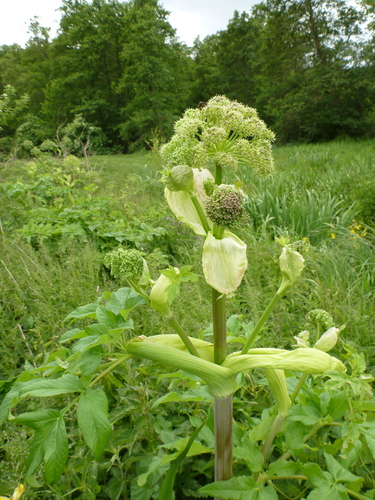
Garden angelica
Angelica archangelica
A towering, architectural marvel of the plant world, Garden Angelica is a magnet for pollinators and a dramatic addition to any damp garden corner. Known for its sweet scent and statuesque presence, it turns your backyard into a bustling hub for beneficial insects.
Quick Identification
Size
Stands 1.5–2.5 meters (5–8 feet) tall with a spread of approximately 0.9–1.2 meters (3–4 feet).
Colors
Bright to lime-green foliage; stems are often tinged with purple at the base; flowers are greenish-white to pale yellow.
Key Features
- Massive, hollow, fluted stems that can be 2 inches thick
- Large, spherical compound umbels (flower heads) up to 6 inches wide
- Large, bipinnate leaves with serrated, heart-shaped leaflets
- Strong, pleasant, celery-like scent when crushed
When You’ll See Them
Behavior
Garden Angelica is a biennial plant, meaning it completes its life cycle over two years. In its first year, it stays relatively low to the ground, forming a lush rosette of large, divided leaves. During the second year, it undergoes a dramatic transformation, shooting up a tall, sturdy flowering stalk that towers over most other garden perennials. This rapid growth makes it a fascinating subject for those watching their garden develop throughout the spring.
Interaction-wise, Garden Angelica acts as a massive 'airport' for local insects. Unlike many flowers that cater to specific bees, its flat-topped flower clusters provide an easy landing platform for a wide variety of pollinators, including hoverflies, lacewings, and honeybees. While it is a peaceful garden inhabitant, it is quite dominant in the landscape, often requiring a bit of space to keep from shading out smaller neighbors.
EverydayEarth exclusive
Camera Tips
Capturing the majesty of Garden Angelica requires thinking about verticality. Because the plant can grow over eight feet tall, place your camera on a tripod or mount it to a nearby fence post at chest height, angled slightly upward. This 'low-angle' perspective emphasizes its towering stature against the sky. If you are using an AI-powered camera to track wildlife, position it to face the flowering umbels; these are high-traffic zones for pollinators. Setting your camera to 'Video' or 'Burst' mode during the midday sun will help you catch the frantic movement of iridescent flies and bees that frequent the blooms.
For a truly unique project, use a time-lapse setting during the late spring (typically May or June). Garden Angelica grows at an astonishing rate during its second year. By taking one photo every hour, you can create a video showing the stalk 'bolting' toward the sun. Ensure your camera is secured tightly, as the large leaves of the Angelica can catch the wind and cause motion-triggering issues if the camera is too close. Using a 'Zone' setting on your camera can help prevent the swaying leaves from constantly triggering the shutter while still capturing the birds and insects that land on the flower heads.
Macro photography is another great use for your trail cam here. If your camera has a close-focus lens, aim it at the individual tiny florets within the larger globe. This is where the nectar is most concentrated. Since the plant thrives in damp areas, early morning is the best time for photos; the dew sits beautifully on the serrated edges of the leaves, and the soft morning light avoids the harsh shadows created by the plant’s dense canopy later in the day.
Similar Species
Species that look similar or are commonly confused with Garden angelica.
Frequently Asked Questions
Record Garden angelica at your habitat
Connect a camera to start building your own species record — AI identifies every visitor automatically.