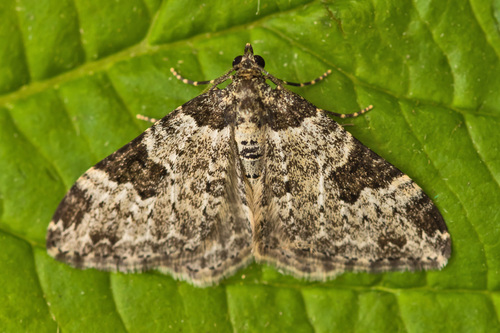
Garden Carpet
Xanthorhoe fluctuata
A master of suburban camouflage, the Garden Carpet is a common and charming visitor to almost every backyard. With its intricate, wavy wing patterns and habit of resting on garden walls, it is the perfect subject for your first foray into nocturnal insect photography.
Quick Identification
Size
Wingspan of 18–25 mm (0.7–1.0 inches)
Colors
Creamy-white to pale grey base with prominent dark brown or blackish irregular patches along the leading edge of the forewing.
Key Features
- Three distinct dark patches on the forewing edge
- Wings held flat and spread wide when resting
- Fine, wavy grey transverse lines across the wings
- Distinctive 'broken' central band pattern
When You’ll See Them
Behavior
As a nocturnal species, its primary activity begins at dusk. Unlike some moths that are shy and elusive, the Garden Carpet is bold and strongly attracted to artificial light sources. It is often seen circling porch lights or fluttering against window panes. It is a solitary flier, but multiple individuals may congregate in areas where their favorite host plants, such as Alyssum or wallflowers, are abundant.
EverydayEarth exclusive
Camera Tips
Placement is everything for this species. Since they are 'carpet' moths, they prefer to rest flat against a substrate. Look for them on wooden fence panels or the siding of your home. If you want to see them in a more 'natural' setting, aim your camera at flowering Brassicaceae plants like Horseradish, Alyssum, or even Cabbage patches. The moths will visit these plants both to nectar and to lay eggs, providing opportunities for behavioral shots beyond just resting poses.
For camera settings, use a high-trigger sensitivity. These moths are small, and a standard PIR sensor might miss them unless they fly directly across the lens. If your camera allows for 'Time Lapse' mode, set it to take a photo every 30 seconds during the first few hours after sunset; this is a great way to catch them as they settle. Because they are active during the warmer months, ensure your camera's infrared (IR) flash is optimized; sometimes a standard flash can 'wash out' the pale white wings of the Garden Carpet, so a lower intensity IR setting is often better for preserving the detail of their markings.
Finally, consider the weather. The best footage is captured on warm, still, and humid nights. On windy nights, these light-weight insects will stay low in the grass and are unlikely to visit your camera station. If you see a Garden Carpet during the day on your wall, you can manually trigger your camera or move your setup to that location, as they often stay in the same spot for several hours until nightfall returns.
Similar Species
Species that look similar or are commonly confused with Garden Carpet.
Frequently Asked Questions
Record Garden Carpet at your habitat
Connect a camera to start building your own species record — AI identifies every visitor automatically.