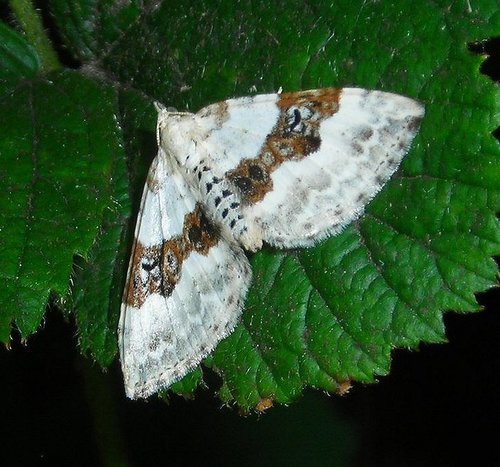
Silver-ground Carpet
Xanthorhoe montanata
A common but beautiful summer visitor, the Silver-ground Carpet is easily recognized by its striking chocolate-brown band set against shimmering silvery wings. Frequently found in gardens across the Palearctic, it is one of the most reliable moth species for backyard observers to spot.
Quick Identification
Size
Wingspan of 24-30mm (0.9-1.2 inches); body length approximately 12-15mm (0.5-0.6 inches).
Colors
Silvery-white or creamy background on the wings, featuring a broad, irregular central band of dark brown or greyish-brown. Both sexes look similar, though males have slightly more feathered antennae.
Key Features
- Silvery-white forewings with a prominent brownish-grey central band
- The central band is often pinched or noticeably narrower in the middle
- Wings are held flat and slightly spread when at rest
- A small, distinct black dot (discal spot) is usually visible within the dark band.
When You’ll See Them
Behavior
The Silver-ground Carpet is a frequent and flighty visitor to backyard habitats. While it is technically a nocturnal species, it is remarkably easy to disturb during the day. If you walk through long grass or brush against a garden shrub, you will often see this moth take a short, erratic flight before quickly settling back down on the underside of a leaf or a fence post.
During the evening and night, they are active flyers, navigating through gardens and meadows in search of nectar and mates. Unlike some moths that are strictly attracted to heavy woodland, this species is a generalist, making it very comfortable in suburban environments where it often rests on the walls of houses near outdoor lights.
EverydayEarth exclusive
Camera Tips
To capture high-quality images of the Silver-ground Carpet, your camera should be positioned near vertical surfaces where moths are likely to rest. Fence panels, garden sheds, or even a white sheet hung near a soft outdoor light are ideal 'landing pads.' Because these moths are small, setting your camera to a macro or close-focus mode is essential; try to maintain a distance of 18 to 24 inches from the target surface to ensure the AI can identify the intricate wing patterns.
Since these moths are crepuscular, a camera with a fast trigger speed is vital. They often flutter for a few seconds before finding a resting spot, and a slow camera might only capture a blur. Using a device with a high-quality infrared (IR) sensor or a 'no-glow' flash will allow you to see the moth's markings in total darkness without scaring it away with a bright white burst. This is particularly helpful for observing their natural resting posture, which is a key identification feature.
For the best diversity of shots, place your camera near nectar sources like Honeysuckle, Valerian, or Buddleia. The moths will hover or settle briefly to feed at dusk. If you are using an AI-powered camera with customizable zones, focus the trigger area on the flowers themselves. In mid-summer, ensure the camera lens is clean of morning dew, as these moths are most active during the humid evenings when the Silver-ground Carpet's 'silvery' wing sheen is most reflective and visible on camera.
Similar Species
Species that look similar or are commonly confused with Silver-ground Carpet.
Frequently Asked Questions
Record Silver-ground Carpet at your habitat
Connect a camera to start building your own species record — AI identifies every visitor automatically.