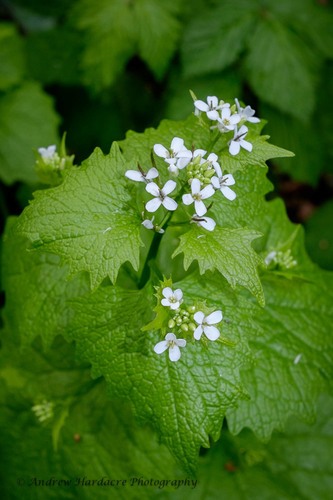
garlic mustard
Alliaria petiolata
A tenacious invader of the forest understory, garlic mustard is a master of early-spring survival. Identifiable by its heart-shaped leaves and pungent aroma, this plant is a key target for backyard conservationists.
Quick Identification
Size
First-year rosettes 2-6 inches (5-15 cm) wide; second-year flowering stalks 12-40 inches (30-100 cm) tall.
Colors
Vibrant emerald green leaves; small, brilliant white flowers with four petals; dark brown or black seeds in slender pods.
Key Features
- Heart or kidney-shaped leaves with scalloped edges
- Distinct garlic odor when foliage is crushed
- Small clusters of white, four-petaled flowers at the stem tip
- Tall, vertical flowering stalks in the second year of growth
When You’ll See Them
Behavior
Garlic mustard is a biennial herb known for its aggressive growth and ability to dominate forest floors. In its first year, the plant exists as a low-growing rosette of leaves that stays green even through the winter. This allows it to get a jump-start on the growing season. In its second year, it sends up a tall flowering stalk, produces thousands of seeds, and then dies, leaving a void that is quickly filled by its own offspring.
One of its most fascinating, albeit destructive, behaviors is its use of chemical warfare. Garlic mustard releases allelopathic compounds into the soil that actively inhibit the growth of native plants and the beneficial fungi that trees need to absorb nutrients. Because North American herbivores like deer find the plant unpalatable, it faces very little pressure from local wildlife, allowing it to spread unchecked through suburban backyards and wild woodlands alike.
EverydayEarth exclusive
Camera Tips
Monitoring garlic mustard with your backyard camera is an excellent way to track the health of your local ecosystem. To capture the plant's rapid 'bolting' phase in the spring, mount your camera on a low stake about 12 inches from the ground. Use a time-lapse setting to take a photo every 4 to 6 hours; over the course of two weeks in April or May, you will see the stalks shoot up several inches a day, providing a dramatic look at invasive growth in action.
If you are interested in the insects that visit the plant, set your camera to its highest trigger speed and aim it directly at the white flower clusters. While many generalist pollinators visit garlic mustard, you may also capture images of the West Virginia White butterfly, a species that is sadly tricked into laying eggs on this plant. For the best clarity, ensure your camera is positioned so the sun is behind it, illuminating the translucent green leaves without creating a silhouette effect.
Since this plant doesn't move, you can experiment with 'Macro' or close-up lenses if your camera supports them. High-resolution photos of the leaf shape and the four-petaled flowers are essential for positive identification versus native look-alikes. Finally, use your camera to document the 'before and after' of your removal efforts. Capturing the return of native ferns or wildflowers to a spot once dominated by garlic mustard is a powerful way to visualize the impact of your conservation work.
Similar Species
Species that look similar or are commonly confused with garlic mustard.
Frequently Asked Questions
Record garlic mustard at your habitat
Connect a camera to start building your own species record — AI identifies every visitor automatically.