Ghost Shiner
Paranotropis buchanani
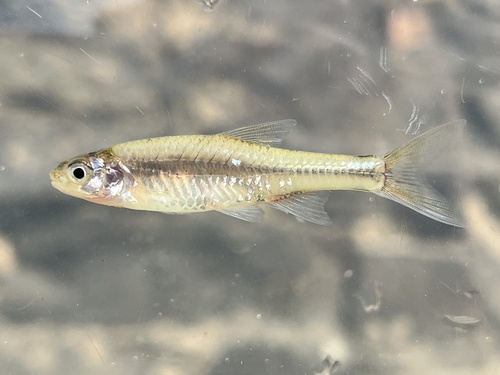
A translucent wonder of North American waterways, the Ghost Shiner is a master of camouflage. This delicate, shimmering fish brings a ghostly beauty to the slow-moving currents of the Mississippi basin.
Quick Identification
Size
3.8 to 6.4 cm (1.5 to 2.5 inches) in length; weighs approximately 1-3 grams
Colors
Translucent to pale silver with a faint, dark lateral stripe; belly is typically white or silvery-white
Key Features
- Translucent, 'ghostly' appearance
- Fusiform, slender body shape
- Large eyes relative to head
- Decurved lateral line along the sides
When You’ll See Them
Geographic range
Where Does the Ghost Shiner Live?
The Ghost Shiner is native to the central regions of North America, primarily anchored within the massive Mississippi River basin. Its range extends from the Great Lakes region in the north, through the central United States, and down to the Gulf Coast drainages of Louisiana and Texas. In addition to its United States populations, it is also found in several northern river systems in Mexico.
Basemap © OpenStreetMap contributors
Behavior
The Ghost Shiner is a highly social, schooling species that spends most of its life in the mid-water columns of large rivers and slow-moving streams. They are known for their schooling behavior, which serves as a primary defense mechanism against larger predatory fish and birds. By staying in tight groups, they create a shimmering, confusing mass that makes it difficult for a predator to single out an individual.
These fish are relatively timid and are most active during the daylight hours when they forage for drifting organic matter. While they are not known for complex social hierarchies, their movements are highly coordinated. In the presence of humans or sudden shadows, they will quickly dart into deeper water or utilize the turbidity of the river to vanish from sight.
EverydayEarth exclusive
Camera Tips
Capturing high-quality footage of the Ghost Shiner requires an underwater camera setup, such as a specialized AI-powered fish cam or a waterproof trail cam mounted in a riverbed. Place the camera in a slow-moving pool or backwater area, ideally over a sandy substrate. Because these fish are translucent, they are best viewed in areas with bright, natural sunlight; position your camera so the sun is behind it or directly overhead to illuminate the silvery scales without creating blinding lens flare.
To attract a school of Ghost Shiners to your camera's field of view, use a fine-mesh bait bag filled with a mixture of breadcrumbs or high-protein fish meal. Secure the bag to a rock or stake about 12 to 18 inches in front of the lens. The scent will slowly disperse in the current, drawing the school toward the camera. Since these are small fish, set your camera to a high-resolution mode (4K if possible) to capture the delicate features of their lateral lines.
Timing is critical when filming in river environments. Aim for a period of low rainfall; heavy rains stir up silt and sediment, making the water too turbid for AI identification. If the water is naturally murky, keep the camera very close to the bait bag—within 6 inches—to maximize clarity. If your camera has adjustable frame rates, choose 60fps to capture the rapid, darting movements characteristic of the shiner family.
Similar Species
Species that look similar or are commonly confused with Ghost Shiner.
Frequently Asked Questions
Record Ghost Shiner at your habitat
Connect a camera to start building your own species record — AI identifies every visitor automatically.