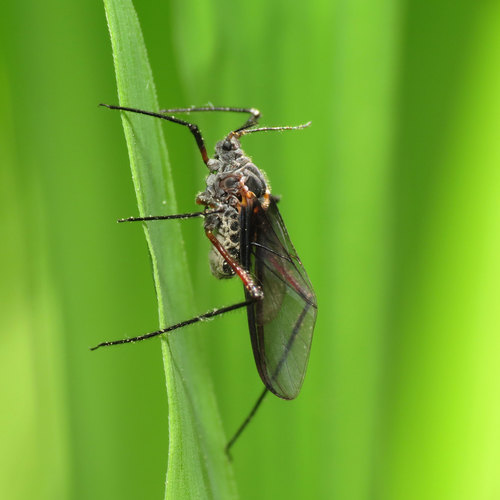
Giant Bark Aphid
Longistigma caryae
Meet the giant of the aphid world, a master of bark-mimicry that forms bustling miniature cities on our most majestic shade trees. Watch closely to see their rhythmic 'dances' and the ants that serve as their tiny bodyguards.
Quick Identification
Size
Body length of approximately 6 mm (0.24 inches); it is the largest aphid species in North America.
Colors
Mottled grayish-brown to tan body with prominent black spots on the abdomen; legs are long and dark brown or black.
Key Features
- Extraordinarily large size for an aphid (up to 1/4 inch)
- Mottled grey-brown camouflage matching tree bark
- Long, spindly dark legs
- Dense colonial clusters on trunks and branches
When You’ll See Them
Behavior
The Giant Bark Aphid is a highly gregarious insect, often found in massive, pulsing clusters on the bark of deciduous trees. Unlike most aphids that hide under leaves, these giants rely on their bark-mimicking coloration to stay hidden in plain sight. They are known for a peculiar collective defense mechanism: when a predator or threat is detected, the entire colony may kick their hind legs in unison, a rhythmic waving intended to confuse or deter attackers like lacewings and parasitic wasps.
These insects are prolific producers of honeydew, a sugary liquid waste product. This substance is so abundant that it often coats the ground and leaves beneath the colony, attracting a wide variety of other insects. They share a famous symbiotic relationship with ants, which 'herd' the aphids and protect them from predators in exchange for the opportunity to harvest the sweet honeydew. In late autumn, winged 'alates' may appear to help the colony spread to new host trees.
EverydayEarth exclusive
Camera Tips
Capturing the Giant Bark Aphid requires a shift in perspective compared to typical backyard wildlife. Because of their small size relative to a deer or raccoon, you should look for a camera with a macro lens or a very short minimum focus distance. Position your camera approximately 6 to 10 inches away from the trunk of a known host tree—Sycamores and Hickories are favorites. Look for 'indicators' before setting up: if you see a vertical trail of ants or shiny, sticky patches on the ground at the base of a tree, follow that line up the trunk to find the aphid colony.
Standard PIR motion sensors often fail to trigger for insects due to their lack of body heat. To bypass this, set your camera to 'Time Lapse' mode. A setting of one photo every 2 to 5 minutes during daylight hours will capture the fascinating social dynamics of the colony, the arrival of 'farmer' ants, and the slow movement of the group as they seek fresh sap-tapping sites. If your camera allows for high-definition video, a short 30-second clip can beautifully document their unique leg-waving defense behavior.
Lighting is crucial since aphid colonies often reside in the shade of the forest canopy. Try to mount your camera on a south-facing section of the trunk to take advantage of the brightest natural light, or use a small, low-intensity external LED light to illuminate the bark texture. Late autumn is the best time for filming, as the colonies reach their maximum size and the lack of leaves allows more light to reach the trunk where they congregate.
Similar Species
Species that look similar or are commonly confused with Giant Bark Aphid.
Frequently Asked Questions
Record Giant Bark Aphid at your habitat
Connect a camera to start building your own species record — AI identifies every visitor automatically.