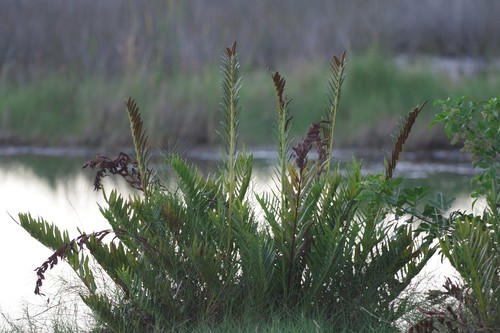
Giant leather fern
Plants diurnal

Giant leather fern

Acrostichum danaeifolium

A prehistoric titan of the wetlands, the Giant leather fern is the largest fern in North America. Its massive, leathery fronds create a lush, tropical sanctuary for your backyard's most elusive wildlife.

0 Sightings
0 Habitats

Quick Identification

straighten

Size

Fronds reach 2–3.5 meters (6–12 feet) in height; individual leaflets grow up to 30 cm (12 inches) long.

palette

Colors

Rich emerald green foliage; mature fertile fronds feature a distinctive golden-brown or cinnamon-colored underside due to spore coverage.

visibility

Key Features

  • Massive architectural fronds reaching up to 12 feet tall
  • Thick, leathery leaflets resistant to salt and wind
  • Uniformly brown spore coverage on the underside of fertile fronds
  • Clump-forming growth habit found in standing water or mud

When You’ll See Them

schedule
Activity pattern diurnal
brightness_5
Peak hours Daylight hours (6 AM - 8 PM) for optimal photography and growth
calendar_month
Season Year-round in tropical climates; most vibrant during the wet season
restaurant
Diet As a photosynthetic plant, it draws energy from sunlight and absorbs water and essential minerals (nitrogen, phosphorus, and potassium) through its specialized root system in wet, often acidic soils.
park
Habitat Mangrove swamps, freshwater marshes, canal banks, and wet suburban rain gardens.

bar_chart
Loading activity data...

Behavior

While the Giant leather fern does not move in the traditional sense, its 'behavior' is defined by its role as a cornerstone of wetland ecosystems. It grows in dense, majestic clumps that act as a natural nursery, providing vital shelter and nesting sites for wading birds, small reptiles, and amphibians. It is a hardy pioneer species, often one of the first to stabilize soil in disturbed marshy areas.

In a backyard setting, this fern is a slow-growing but persistent giant. It responds to environmental moisture by expanding its root system to anchor itself in soft mud. It is highly resilient, capable of thriving in brackish water where most other ferns would perish, making it a stoic guardian of the shoreline that provides year-round greenery and privacy.

photo_camera EverydayEarth exclusive

Camera Tips

To capture the best images of the Giant leather fern, you must think like the wildlife that uses it for cover. This species is an incredible 'stage' for backyard cameras. Position your camera on a low stake, roughly 18 inches off the ground, and point it toward the base of the fern clump. This is a high-traffic area for marsh rabbits, turtles, and even snakes that use the dense fronds to hide from predators. Because these ferns grow in humid, wet environments, ensure your camera has a high-quality anti-fog coating or use a small rain hood to keep the lens clear during the heavy morning dew common in its habitat.

For those interested in the plant's unique biology, use a time-lapse setting to document the 'fiddleheads'—the tightly coiled new fronds—as they emerge from the center of the plant. These can grow several inches in a single day during the peak of the rainy season, creating a dramatic visual sequence of prehistoric-looking growth. If your camera has adjustable motion sensitivity, you may need to turn it down slightly on windy days; the massive 10-foot fronds act like sails and can trigger hundreds of 'false' photos if the sensor is too sensitive.

Lighting is your best friend when photographing this fern. To highlight the leathery texture of the leaves, try to position your camera so it is backlit during the early morning or late afternoon. This 'golden hour' light will cause the golden-brown spores on the underside of the fertile fronds to glow, creating a striking contrast against the deep green of the sterile leaves. At night, the thick, waxy surface of the leaflets reflects infrared (IR) light exceptionally well, making it a perfect, high-contrast backdrop for nocturnal visitors like raccoons or opossums that forage around the plant's base.

Frequently Asked Questions

As a plant, the Giant leather fern is active during the day while it performs photosynthesis. However, it is most visually stunning in the early morning when dew collects on the fronds and the low sun highlights its spore-covered undersides.
To grow this fern, you need a consistently wet or boggy area with plenty of sun or partial shade. They are ideal for low-lying spots or the edges of garden ponds where the soil stays saturated year-round.
They don't 'eat' like animals; they require sunlight, water, and nutrient-rich soil. They thrive particularly well in soils high in organic matter, often found in swampy or marshy environments.
Yes, they are frequently seen in suburban landscapes in Florida and the Gulf Coast, especially in developments built near drainage canals, retention ponds, or reclaimed wetlands.
Giant leather ferns (A. danaeifolium) grow much larger (up to 12 feet) and have spores covering the entire underside of their fertile fronds, whereas Golden leather ferns (A. aureum) are smaller and only have spores on the top few leaflets.

Record Giant leather fern at your habitat

Connect a camera to start building your own species record — AI identifies every visitor automatically.

Join free Identify a photo