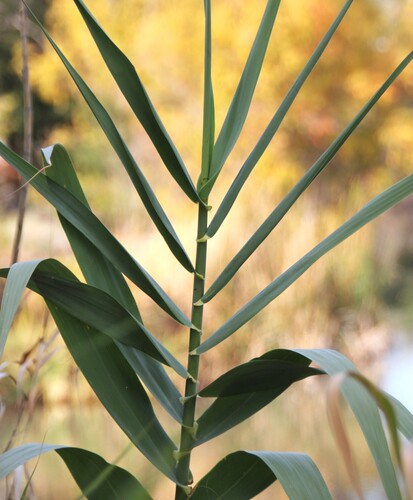
giant reed
Arundo donax
A towering, bamboo-like invader that dominates waterways and backyards alike. Monitor this aggressive grass to protect your local ecosystem from its rapid expansion.
Quick Identification
Size
Stalks reach 6-10 meters (20-33 feet) in height; leaves are 30-60 cm (12-24 inches) long
Colors
Blue-green to grey-green foliage; straw-colored woody stems; silver to purple-tinged flower plumes
Key Features
- Hollow, bamboo-like stalks up to 1 inch thick
- Large, feathery seed heads (plumes) at the top
- Leaves clasp the stem with a distinct wavy base
- Forms dense, impenetrable thickets
When You’ll See Them
Behavior
In a backyard or riparian setting, giant reed alters the environment by increasing fire risks and changing water flow. It is highly flammable even when green, and its dense growth can cause localized flooding by obstructing creek banks. While it doesn't move like an animal, its growth 'behavior' is relentless, with stalks capable of growing several inches in a single day during the peak of summer.
EverydayEarth exclusive
Camera Tips
Placement is key for identification. Position the camera about 3-4 feet off the ground, angled slightly upward. You want to capture the point where the leaf meets the stem; the 'clasping' nature of the leaf base is a primary diagnostic feature. If you are monitoring the plant for removal purposes, place a measurement stake or a known object (like a fence post) in the frame to provide a scale of reference for its height and density changes over time.
If you must use motion-activation to catch wildlife moving through the reeds, set your camera's sensitivity to 'Low' and choose a focal point that is relatively shielded from the wind. The large, blade-like leaves of Arundo donax act like sails and will trigger most sensors even in a light breeze. For the best nighttime shots, ensure your IR flash is powerful enough to penetrate the dense foliage, as the thick stalks can create heavy shadows that obscure anything moving within the thicket.
Similar Species
Species that look similar or are commonly confused with giant reed.
Frequently Asked Questions
Record giant reed at your habitat
Connect a camera to start building your own species record — AI identifies every visitor automatically.