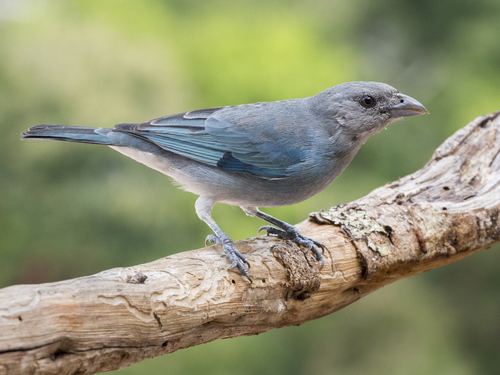
Glaucous Tanager
Thraupis glaucocolpa
A shimmering pale-blue gem of the northern South American lowlands, the Glaucous Tanager is a social and vocal visitor to tropical gardens. Its unique greenish-blue plumage makes it a prized sighting for backyard birders and wildlife photographers alike.
Quick Identification
Size
16–18 cm (6.3–7.1 inches) in length; weighs approximately 31–37 g (1.1–1.3 oz)
Colors
Uniformly pale glaucous-blue with a distinct greenish-yellow wash on the wing coverts and flight feathers; no significant sexual dimorphism.
Key Features
- Pale glaucous-blue plumage with greenish tint
- Bright greenish-yellow edging on wing feathers
- Pale greenish-white undertail coverts
- Stout, dark finch-like bill
When You’ll See Them
Geographic range
Where Does the Glaucous Tanager Live?
The Glaucous Tanager is a South American specialist found primarily in the northern reaches of the continent. Its core range spans the Caribbean coast and interior lowlands of northern Colombia and northern to central Venezuela. While it is not a migratory species, it is highly mobile within its range, moving locally to follow the seasonal ripening of various fruit trees.
Basemap © OpenStreetMap contributors
Behavior
Glaucous Tanagers are energetic and highly social birds, usually found traveling in pairs or small family groups. They are known for their restless foraging style, constantly hopping between branches and occasionally hanging upside down to reach ripe fruit. While they are naturally forest-edge birds, they have become remarkably accustomed to human presence, often being one of the more visible species in tropical suburban gardens.
These birds are vocal throughout the day, communicating with high-pitched, squeaky chirps and twittering songs. They are not particularly shy and will often frequent feeders alongside other tanager species. During the breeding season, pairs become more territorial, building cup-shaped nests hidden in dense foliage, but they quickly return to their gregarious nature once the young have fledged.
EverydayEarth exclusive
Camera Tips
To successfully capture the Glaucous Tanager on your backyard camera, placement is critical. These birds prefer the mid-to-upper canopy but will descend for water and food. Aim your camera at a height of 5 to 8 feet, focusing on a sturdy branch or a platform feeder. Because they are fast-moving, a camera with a quick trigger speed or high-frame-rate video capability is necessary to avoid motion blur when they flit between perches.
The best way to lure this species into view is with fruit. Sliced papaya, plantain, or oranges placed on an open platform feeder are irresistible to them. If you are using an AI-powered camera, ensure it is positioned to capture the bird's profile; the greenish-yellow edging on their wings is a key identifier that the AI will use to distinguish them from the similar Blue-grey Tanager. Early morning light provides the best color accuracy for their subtle 'glaucous' hue, so try to position the camera facing away from the direct rising sun to avoid silhouettes.
Water features are also a major draw. A birdbath with a small dripper or fountain will attract Glaucous Tanagers for both drinking and bathing. Place your camera approximately 3 to 4 feet from the water source to get clear, detailed shots. During the drier months in Colombia and Venezuela, water sources become even more effective for consistent sightings. Check your lens regularly, as tropical humidity can cause fogging in the early morning hours when these birds are most active.
Similar Species
Species that look similar or are commonly confused with Glaucous Tanager.
Frequently Asked Questions
Record Glaucous Tanager at your habitat
Connect a camera to start building your own species record — AI identifies every visitor automatically.