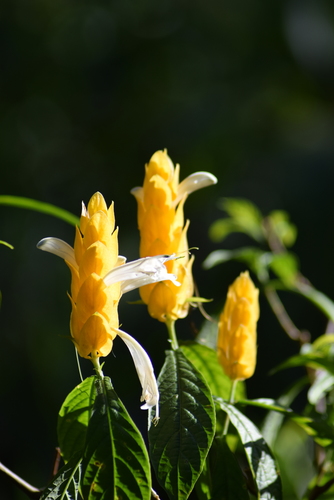
golden shrimp plant
Pachystachys lutea
With its neon-yellow spikes and delicate white 'shrimp' blooms, this Peruvian native is a tropical masterpiece. It serves as a vibrant neon sign for hummingbirds, making it the ultimate centerpiece for any wildlife-friendly backyard.
Quick Identification
Size
Height: 0.5–2.5 m (1.5–8 ft); Spread: 60–120 cm (24–48 in)
Colors
Neon yellow bracts with contrasting small white flowers and dark, forest-green foliage
Key Features
- Upright, four-sided spikes of overlapping bright yellow bracts
- Slender, white tubular flowers that emerge from the yellow spikes
- Large, lance-shaped leaves with prominent, deep veining
- Evergreen, soft-stemmed shrub habit
When You’ll See Them
Geographic range
Where Does the golden shrimp plant Live?
Native to the tropical lowlands of Peru, the golden shrimp plant thrives in the warm, humid heart of South America. Beyond its native roots, it has been widely introduced across the globe as an ornamental favorite, establishing naturalized populations throughout Central America, the Caribbean, and Southeast Asia. In the United States, it is a common sight in the frost-free gardens of Florida, Southern California, and Hawaii, where it flourishes in the consistent heat.
Basemap © OpenStreetMap contributors
Behavior
The golden shrimp plant is a dynamic botanical feature in tropical landscapes, characterized by its prolific blooming cycle. Unlike many flowering plants that offer a brief display, this species produces its iconic yellow spikes continuously throughout the warm months. These spikes are actually specialized leaves called bracts, which serve as long-lasting visual advertisements for pollinators, while the true white flowers are fleeting and typically last only a few days.
In a backyard ecosystem, this plant acts as a high-traffic hub for nectar-seeking wildlife. It has evolved a symbiotic relationship with long-tongued pollinators, specifically hummingbirds and certain butterflies, who are attracted to the vivid yellow color. While the plant remains stationary, its rapid growth and the sequential opening of its flowers make it a constantly changing subject for nature observers.
EverydayEarth exclusive
Camera Tips
To capture the best footage of the golden shrimp plant and its visitors, mount your AI camera on a stake or tripod roughly 2 to 3 feet above the ground, level with the brightest yellow spikes. Because this plant is a primary nectar source, focusing your lens on the newest white flowers emerging from the yellow bracts will increase your chances of catching a hummingbird mid-hover. A side-profile angle is often better than a top-down view, as it captures the length of the pollinator's beak as it enters the flower.
Lighting is a critical factor for this species due to the high reflectivity of its neon-yellow bracts. To avoid 'blown out' images where the yellow looks like a solid white blob, place your camera in an area that receives dappled sunlight or use the morning sun (7 AM to 10 AM). The soft light of dawn brings out the deep green of the leaves and provides a saturated, rich gold color in the bracts without harsh highlights.
Consider using a time-lapse setting to document the plant's unique growth pattern. A photo taken every hour for a week will reveal the fascinating way the white flowers 'pop' out of the yellow structure and then wither, only to be replaced by another bloom higher up the spike. If your camera supports high-speed triggers, set it to its most sensitive motion detection to catch the rapid, darting movements of the Sulphur butterflies and hummingbirds that frequent the blooms.
Similar Species
Species that look similar or are commonly confused with golden shrimp plant.
Frequently Asked Questions
Record golden shrimp plant at your habitat
Connect a camera to start building your own species record — AI identifies every visitor automatically.