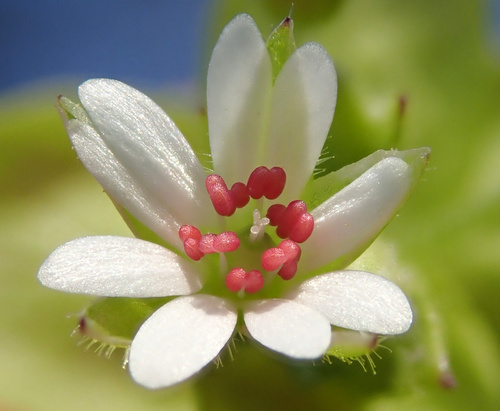
Greater Chickweed
Stellaria neglecta
A delicate star of the woodland floor, the Greater Chickweed is a sign of a healthy, damp backyard ecosystem. With its larger-than-average blooms and lush green carpets, it offers a beautiful miniature world for your cameras to discover.
Quick Identification
Size
Stems reach 10-90 cm (4-35 inches) in length; flowers are 8-13 mm (0.3-0.5 inches) wide.
Colors
Lush bright green foliage; brilliant white petals; sepals are green with a slight hairy texture.
Key Features
- Single line of fine hairs running down the stem
- Ten stamens per flower (unlike the 3-8 found in common chickweed)
- Deeply lobed white petals that appear as ten separate petals
- Larger, broader leaves than other Stellaria species
When You’ll See Them
Behavior
During its peak growing season, the plant exhibits 'sleep movements,' where its leaves fold together at night to protect the developing buds. Its flowers are highly sensitive to light and moisture, opening wide during sunny intervals to welcome small pollinators like hoverflies and solitary bees. Unlike its more invasive relatives, Greater Chickweed is rarely a nuisance, instead providing a seasonal burst of greenery before the heat of late summer causes it to go to seed and die back.
EverydayEarth exclusive
Camera Tips
Lighting is the most critical factor for this species. Because it thrives in shade, standard camera settings may struggle with under-exposure. If your camera allows for exposure compensation, bump it up slightly (+0.5 or +1.0) to ensure the white petals don't look gray. The best time for 'action' shots is mid-morning; as the sun hits the patch, the flowers will physically open, and the sudden increase in light often triggers the AI to start recording. This is also when you'll catch the most insect activity, as hoverflies are frequent visitors to the ten yellow stamens.
If you are using a trail camera with a fixed focus, place it at least 2 feet away to avoid a blurry foreground, but if you have a camera with a macro or 'near focus' lens, get as close as 8 inches. This allows you to document the single line of hairs on the stem, which is the key identifier for this species. To create a compelling time-lapse, set your camera to take a photo every 30 minutes from dawn to dusk; you will be able to see the 'waking up' process as the leaves unfurl and the flowers track the movement of the sun through the tree branches overhead.
Similar Species
Species that look similar or are commonly confused with Greater Chickweed.
Frequently Asked Questions
Record Greater Chickweed at your habitat
Connect a camera to start building your own species record — AI identifies every visitor automatically.