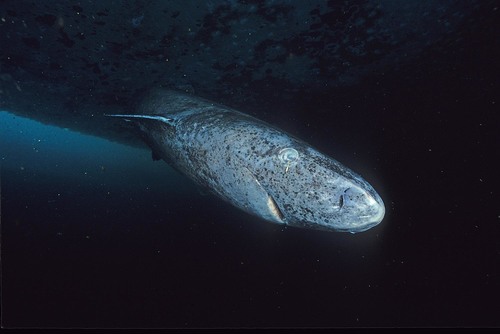
Greenland Shark
Somniosus microcephalus
Meet the ocean's longest-living vertebrate, a ghost of the Arctic depths that can live for over four centuries. The Greenland shark is a master of survival in the coldest waters on Earth, moving with a slow, hypnotic grace through the dark.
Quick Identification
Size
2.4–7.3 metres (8–24 feet) in length; weighing up to 1,400 kg (3,100 lbs)
Colors
Uniformly dark brown, slate grey, or purplish-black, sometimes with faint white spots or dark bands on the flanks
Key Features
- Small dorsal fins without spines
- Short, rounded snout with tiny, often cloudy eyes
- Rough, sandpaper-like skin with dermal denticles
- Large, heavy body with a sluggish, slow-moving appearance
When You’ll See Them
Geographic range
Where Does the Greenland Shark Live?
The Greenland shark is primarily native to the frigid waters of the North Atlantic and Arctic Oceans. Its core range spans from the coast of eastern Canada and Greenland across to northern Europe and Russia, including the deep waters around Iceland and the Svalbard archipelago. While traditionally associated with the far north, occasional sightings and deep-water captures have occurred as far south as the Caribbean and the coast of France, suggesting a much wider distribution in the deep, cold layers of the world's oceans.
Basemap © OpenStreetMap contributors
Behavior
The Greenland shark is often referred to as the 'sleeper shark' due to its incredibly slow swimming speed and perceived lethargy. Moving at an average speed of less than 1 mph, it is one of the slowest-swimming fish in the world. Despite this, they are apex predators and efficient scavengers, capable of capturing much faster prey like seals by sneaking up on them while they sleep. They are mostly solitary, navigating the dark, frigid depths of the Arctic and North Atlantic Oceans.
Interactions with humans are extremely rare due to the shark's preference for deep, cold water. They are known for their extreme longevity, with some individuals estimated to be over 400 years old. This slow pace of life extends to their metabolism and reproduction; they do not reach sexual maturity until they are about 150 years old. While not aggressive toward humans, their massive size and opportunistic feeding habits make them a formidable presence in the deep sea.
EverydayEarth exclusive
Camera Tips
Capturing a Greenland shark on camera is a significant challenge that requires specialized deep-sea equipment rather than a standard backyard trail cam. For those living in Arctic coastal regions or near deep fjords, the best method is using a Baited Remote Underwater Video (BRUV) system. Using oily fish like mackerel, herring, or seal blubber as a lure is highly effective, as these sharks have an incredibly keen sense of smell and will follow a scent trail for kilometers through the darkness.
Because of the extreme depths—often exceeding 500 meters—your camera must be housed in a pressure-resistant casing rated for deep-sea environments. Standard waterproof housings will implode at these depths. Additionally, since the deep ocean is pitch black, high-powered LED arrays are essential. However, keep the light's intensity in mind; while Greenland sharks are often nearly blind due to parasitic copepods attached to their eyes, sudden bright light can still wash out the image on their highly reflective, rough skin.
For the best footage, mount your camera to a weighted rig or a benthic lander that sits firmly on the ocean floor. Aim the camera horizontally across a 'bait arm' to ensure the shark passes through the focal plane when it investigates the lure. In shallower Arctic regions during winter, you might find success lowering a camera through a hole in the sea ice, but be prepared for slow action. These sharks move at a glacial pace, and it may take hours or even days for one to arrive at your lens.
Similar Species
Species that look similar or are commonly confused with Greenland Shark.
Frequently Asked Questions
Record Greenland Shark at your habitat
Connect a camera to start building your own species record — AI identifies every visitor automatically.