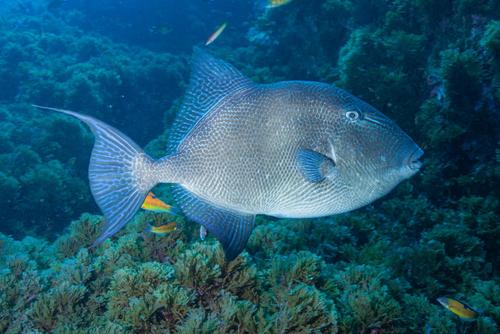
Grey Triggerfish
Balistes capriscus
A clever architect of the Atlantic reefs, the Grey Triggerfish uses a unique locking spine and 'water-jet' hunting tactics to thrive in underwater neighborhoods. This bold, inquisitive fish is a favorite for coastal observers and underwater photographers alike.
Quick Identification
Size
Length 30-60 cm (12-24 inches); Weight typically 1-3 kg (2-6 lbs)
Colors
Drab grey, olive-green, or yellowish-brown; features small blue spots or lines on fins and upper body
Key Features
- Three-spined 'trigger' mechanism on dorsal fin
- Tough, leathery, sandpaper-like skin
- Small mouth with powerful, human-like teeth
- Compressed, oval-shaped body profile
When You’ll See Them
Geographic range
Where Does the Grey Triggerfish Live?
The Grey Triggerfish is a widely distributed marine traveler, native to the temperate and tropical waters of the Atlantic Ocean. In the Western Atlantic, its range stretches from the shores of Nova Scotia and the northern Gulf of Mexico all the way south to Argentina. Across the ocean, it is frequently found in the Eastern Atlantic from the British Isles down to Angola, including the entirety of the Mediterranean Sea. While they prefer coastal structures, they are occasionally found in open water associated with floating sargassum mats.
Basemap © OpenStreetMap contributors
Behavior
The Grey Triggerfish is an intelligent and highly inquisitive species known for its unique hunting methods. It is a benthic feeder that frequently uses its pectoral fins to hover over the seafloor, blowing a powerful stream of water into the sand to uncover hidden prey like sand dollars, crabs, and sea urchins. This 'water-jetting' behavior is a hallmark of their resourcefulness in the wild.
They are famously named for their 'trigger' spine. When threatened or when sleeping, the fish wedges itself into a rocky crevice and locks its large first dorsal spine upright. This spine can only be lowered by depressing a smaller second spine—the trigger—making it virtually impossible for predators to dislodge them. In coastal areas, they are often quite bold and may approach divers or snorkelers to investigate their gear.
EverydayEarth exclusive
Camera Tips
Capturing the Grey Triggerfish requires an underwater camera setup, such as a waterproof trail cam or a tethered marine camera, positioned near structural 'edges.' If you have access to a coastal dock, pier, or a private rock jetty, mount your camera 3 to 6 feet below the low-tide mark. Aim the lens at vertical structures like pilings or large submerged boulders where the fish naturally graze for barnacles and small crustaceans.
These fish are extremely motivated by food and have a high degree of curiosity. To attract them into the frame, use a mesh 'chum bag' filled with crushed crab shells or squid. Secure the bag approximately two feet from the lens to ensure the fish remains in focus while it investigates. Because they have human-like teeth and are quite bold, they may actually bite at the camera housing or mounting brackets; ensure your gear is rugged and has a protective casing.
Daylight is your best friend for capturing their subtle coloration. Grey Triggerfish exhibit beautiful, iridescent blue spots on their fins that only appear under bright, direct sunlight. Set your camera to a high frame rate (60fps or higher) to capture their unique 'balistiform' swimming style, where they undulate their dorsal and anal fins rather than using their tails for primary locomotion. For the clearest image, schedule your recording sessions during an incoming 'high' tide when coastal water clarity is typically at its best.
Similar Species
Species that look similar or are commonly confused with Grey Triggerfish.
Frequently Asked Questions
Record Grey Triggerfish at your habitat
Connect a camera to start building your own species record — AI identifies every visitor automatically.