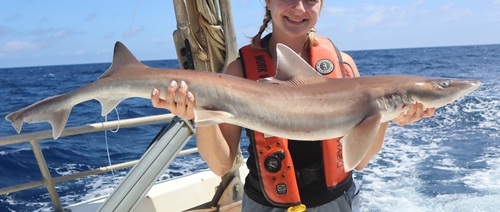
Gulf Smooth-hound
Mustelus sinusmexicanus
A sleek and shy resident of the Gulf's sandy floor, the Gulf Smooth-hound is a master of the subtidal world. This specialized crab-eater offers a fascinating, harmless look into the diverse world of Atlantic sharks.
Quick Identification
Size
60–120 cm (24–47 inches) in length; typically weighs 2–7 kg (4.5–15 lbs)
Colors
Bronze to grey-brown upper body with a pale, creamy white underside; lacks the spots or stripes seen in other houndsharks
Key Features
- Slender, streamlined body with two similarly sized large dorsal fins
- Large, oval eyes with a cat-like horizontal pupil and reflective sheen
- Smooth-textured skin with small, overlapping scales (dermal denticles)
- Blunt, rounded snout with a small mouth adapted for crushing shells
When You’ll See Them
Geographic range
Where Does the Gulf Smooth-hound Live?
This shark is native to the North American region of the Western Central Atlantic, primarily concentrated throughout the Gulf of Mexico. Its core range extends from the coastal waters of the southern United States, including Florida and Texas, down along the Mexican coastline to the Yucatan Peninsula. While primarily a resident of the Gulf, they are occasionally documented in the Caribbean waters surrounding Cuba and the Bahamas.
Basemap © OpenStreetMap contributors
Behavior
The Gulf Smooth-hound is a graceful, bottom-dwelling shark that spends its life cruising just above the sandy and muddy substrates of the continental shelf. Unlike the more aggressive open-water sharks, this species is relatively shy and social, often traveling in small groups or schools. They are highly attuned to their environment, using specialized sensors in their snouts to detect the electrical impulses of prey buried beneath the sand.
During the day, they are often less active, preferring to rest or swim slowly in deeper, cooler waters. As the sun sets, they move into shallower areas to forage. They are harmless to humans, as their teeth are not sharp and serrated like a Great White's, but are instead flat and pavement-like—perfect for grinding up the hard shells of crabs and lobsters. This gentle nature makes them a favorite for underwater photographers and researchers.
EverydayEarth exclusive
Camera Tips
Capturing the Gulf Smooth-hound requires a specialized underwater setup, often referred to as a Baited Remote Underwater Video (BRUV) station. For coastal residents with access to a dock or pier, a waterproof housing or a dedicated underwater trail camera can be lowered to the seafloor. Ensure the camera is weighted securely so it doesn't drift with the current, and angle it slightly downward to focus on a patch of open sand where these sharks like to forage.
To guarantee a sighting, use a scent-based lure. A mesh bag or a perforated PVC tube filled with crushed crab, oily sardines, or shrimp shells is irresistible to a Gulf Smooth-hound. Secure the bait about 2 to 3 feet in front of the lens to keep the shark in the frame while it investigates. Because they are most active during the low-light hours of dawn and dusk, a camera with high-quality infrared (IR) or 'night vision' capabilities is essential for clear footage.
If you are setting your camera from a boat or a long pier, look for 'edges' in the marine landscape—where a seagrass bed meets an open sandy channel. These are the natural highways for smooth-hounds. Set your camera to record high-frame-rate video rather than still photos, as their graceful, undulating swimming motion is much more impressive to capture in motion. Check your local tides; the hour before and after high tide often brings these sharks closer to shore.
Similar Species
Species that look similar or are commonly confused with Gulf Smooth-hound.
Frequently Asked Questions
Record Gulf Smooth-hound at your habitat
Connect a camera to start building your own species record — AI identifies every visitor automatically.