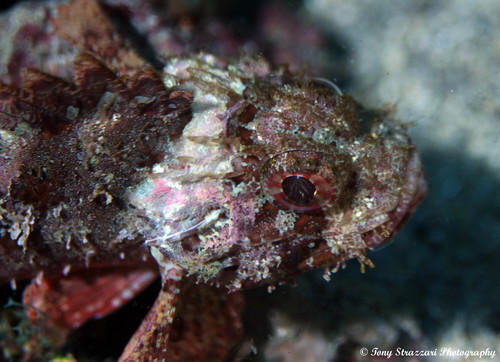
Hairy Scorpionfish
Scorpaenodes hirsutus
The Hairy Scorpionfish is the ultimate master of reef camouflage, covered in delicate skin filaments that help it vanish into the coral. This tiny, venomous wonder is a testament to the incredible evolutionary adaptations of the Indo-Pacific's hidden inhabitants.
Quick Identification
Size
Small and compact, typically reaching 4 to 7.5 cm (1.6 to 3 inches) in length
Colors
Mottled reddish-brown, orange, and tan with white patches; features numerous dark spots and intricate camouflage patterns
Key Features
- Densely covered in small fleshy cirri (hairs) across the head and body
- Cryptic mottled red and white camouflage
- Thirteen venomous dorsal spines
- Large, fan-like pectoral fins with dark bands
When You’ll See Them
Geographic range
Where Does the Hairy Scorpionfish Live?
The Hairy Scorpionfish is a native of the sprawling Indo-Pacific region, inhabiting the warm, tropical waters from the Red Sea and East Africa all the way to the central Pacific islands. It is frequently encountered along the coasts of Australia, particularly the Great Barrier Reef, and its range extends northward to the subtropical waters of southern Japan. While widespread across countries like Indonesia, the Philippines, and Thailand, its presence is often overlooked due to its secretive nature and preference for hiding in complex reef structures.
Basemap © OpenStreetMap contributors
Behavior
The Hairy Scorpionfish is a master of reclusive living, spending the vast majority of its life perfectly still. It is a primarily nocturnal species that remains tucked deep into the labyrinthine crevices of coral reefs or under rocky overhangs during the day. Because of its exceptional camouflage and the fleshy skin flaps (cirri) that break up its outline, it is nearly indistinguishable from the surrounding algae and coral-encrusted rocks.
Unlike many other reef fish that swim actively to find food, the Hairy Scorpionfish is an ambush specialist. It moves with a slow, hopping gait along the sea floor, using its pectoral fins like hands to stabilize itself. While generally peaceful and non-aggressive, it possesses a formidable defense system of venomous spines. It rarely interacts with humans, though it can pose a risk to wading beachgoers or divers who accidentally touch it while exploring rocky tide pools.
EverydayEarth exclusive
Camera Tips
To capture the elusive Hairy Scorpionfish on an underwater trail camera, you must focus on 'micro-habitats.' These fish are tiny and rarely leave the safety of the reef, so place your camera housing on a weighted plate or a low-profile tripod directly facing a crevice, cave entrance, or a patch of coral rubble. Because they are stationary for long periods, high-sensitivity motion sensors are required, or better yet, use a time-lapse setting that takes a photo every 30 seconds to catch the moment they emerge at dusk.
Lighting is your biggest challenge and your best tool. Since this species is nocturnal, you will need powerful underwater LED video lights. For the best results, use a 'red light' mode if your camera supports it, as many reef inhabitants are less startled by red spectrum light. If using white light, position your strobes or lamps at a 45-degree angle to the side of the fish to create shadows that highlight the 'hairy' texture of their skin flaps, which often get washed out by direct, front-on lighting.
Macro settings are essential for this species. If your camera allows for manual focus or has a dedicated macro mode, set it for a distance of approximately 10 to 20 centimeters. This ensures the fine details of the cirri are sharp. Since these fish are ambush predators, you can sometimes attract them by placing a small mesh bag of crushed baitfish or shrimp nearby; this draws in the small crustaceans that the Hairy Scorpionfish preys upon, bringing the hunter into your camera's field of view.
Stability is key in the marine environment. Use diving weights or heavy-duty rubber straps to secure your camera setup to a non-living substrate, like a dead rock or a sandy patch. Avoid areas with high surge, as the movement of sand and bubbles can trigger false motion detections and drain your battery. Check your housing seals meticulously, as these cameras may need to sit at depth for several hours to catch the fish's peak activity period during the middle of the night.
Similar Species
Species that look similar or are commonly confused with Hairy Scorpionfish.
Frequently Asked Questions
Record Hairy Scorpionfish at your habitat
Connect a camera to start building your own species record — AI identifies every visitor automatically.