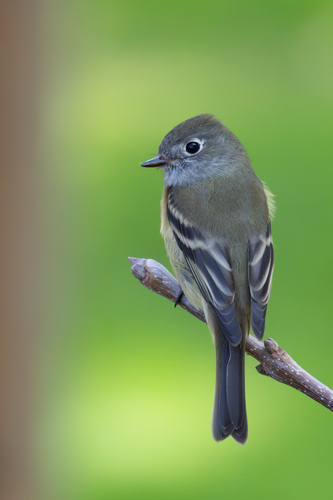
Hammond's Flycatcher
Empidonax hammondii
A pint-sized dynamo of the western pines, Hammond's Flycatcher is known for its tireless energy and aerial precision. This high-canopy specialist is a gem for any backyard observer with the right vantage point.
Quick Identification
Size
Length: 4.7-5.9 in (12-15 cm); Wingspan: 8.3-9.1 in (21-23 cm); Weight: 0.3-0.4 oz (8-12 g)
Colors
Grayish-olive upperparts, whitish throat, and a pale yellow wash on the belly; two distinct white wing bars and a thin white eye-ring.
Key Features
- Small, dark bill with a shorter lower mandible
- Distinct almond-shaped white eye-ring
- Frequent and rapid flicking of both wings and tail simultaneously
- Long primary feathers (wingtips) that extend well down the tail
When You’ll See Them
Geographic range
Where Does the Hammond's Flycatcher Live?
Native to the mountainous regions of western North America, Hammond's Flycatcher is a specialist of the great evergreen corridors. Its breeding territory stretches from the boreal forests of central Alaska and the Yukon down through the Pacific Northwest and the Rocky Mountains into California and New Mexico. During the winter months, these tiny birds undertake a significant migration to the highland forests of Mexico and northern Central America, seeking out climates that support a year-round supply of insects.
Basemap © OpenStreetMap contributors
Behavior
They are famously high-strung, characterized by a near-constant twitching or flicking of their wings and tail. While they are territorial and vocal during the spring and summer breeding months, they tend to be more secretive during migration. They rarely descend to the ground, preferring to stay within the middle to upper layers of the forest where their favorite prey resides.
EverydayEarth exclusive
Camera Tips
Use a camera with a very fast trigger speed (0.2 seconds or less) because these birds are incredibly quick; a slow trigger will result in a frame full of empty air. Setting your device to 'burst mode' or 'photo+video' is highly recommended to catch the split-second wing-flicking behavior that is vital for identifying the species. Since they are attracted to the sound of water, placing a high-elevation bird bath or a misting feature within view of your camera can lure them down from the highest branches during hot summer afternoons.
Lighting is your best friend for identification. Try to position the camera so the perch is illuminated by morning sun, which will highlight the subtle olive-green tones of their back and the specific shape of their eye-ring. Avoid heavily backlit areas, as flycatchers quickly turn into dark silhouettes, making them indistinguishable from other species. If you are using an AI-powered camera, ensure the firmware is updated to recognize small passerines, as their movement can sometimes be mistaken for wind-blown leaves.
Similar Species
Species that look similar or are commonly confused with Hammond's Flycatcher.
Frequently Asked Questions
Record Hammond's Flycatcher at your habitat
Connect a camera to start building your own species record — AI identifies every visitor automatically.