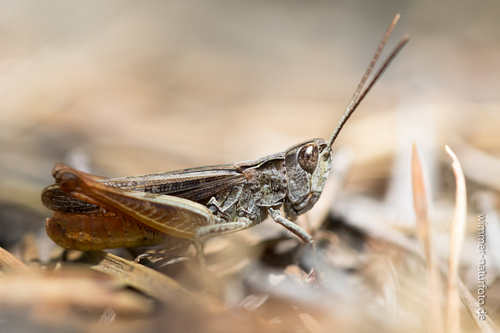
Heath Grasshopper
Chorthippus vagans
A master of camouflage in the sun-drenched heath, the Heath Grasshopper is a rare gem of the late summer. Known for its rhythmic song and vibrant orange-tipped males, this agile insect is a testament to the beauty found in our driest landscapes.
Quick Identification
Size
Males 12-16 mm (0.47-0.63 in); Females 17-22 mm (0.67-0.87 in)
Colors
Mottled brown, grey, or ochre; males often have a bright orange or reddish-orange tip on the abdomen; distinct dark markings along the sides of the thorax.
Key Features
- Pronotal side-keels strongly indented or sharply angled inward
- Males feature a vibrant reddish-orange abdominal tip
- Camouflage pattern mimicking dry earth and lichen
- Wings typically reach or slightly exceed the end of the abdomen
When You’ll See Them
Behavior
The Heath Grasshopper is a quintessential sun-lover, spending the vast majority of its day basking in open, sunny patches to regulate its body temperature. Because it favors dry, nutrient-poor environments, it has evolved to be highly mobile, frequently moving between bare ground for warmth and sparse vegetation for cover. Unlike some more sedentary species, the Heath Grasshopper is an agile flyer and a powerful jumper, making it a challenge to track without the help of a motion-activated camera.
Socially, the species is best known for its 'song' or stridulation. Males produce a rhythmic, whispering sound by rubbing their hind legs against their forewings to attract mates. This acoustic behavior is most intense during the hottest hours of the day. While they are generally shy around humans, they are not aggressive and will simply vanish into the dry grass if they feel vibrations from approaching footsteps.
EverydayEarth exclusive
Camera Tips
To capture high-quality footage of the Heath Grasshopper, you must rethink your camera placement. Unlike mammals that follow trails, these insects are attracted to 'thermal hotspots.' Look for patches of bare sandy soil, flat stones, or very short, dry grass that receives direct southern sun. Place your camera at ground level—literally resting on the earth—using a small tripod or a beanbag mount. Aiming the lens horizontally across these warm patches will give you the best chance of capturing their profile as they bask.
Because the Heath Grasshopper is small, a standard trail camera may struggle with focus and trigger speed. We recommend using an AI-powered camera with a macro lens or a 'close-focus' modification. Set your camera's trigger sensitivity to the highest possible level. Since they are triggered by movement rather than heat signatures (PIR sensors can struggle with cold-blooded insects), an AI system that recognizes pixel changes is significantly more effective at capturing their quick hops and leg movements.
Lighting is critical for bringing out their camouflaged details. Position your camera so the sun is behind it or to the side; backlighting can wash out the subtle brown and grey mottling that defines the species. If your camera allows for high-speed video, use it. The Heath Grasshopper's stridulation (the vibration of their legs) and their explosive leaps happen in fractions of a second, and slow-motion playback reveals fascinating behaviors that the naked eye misses. In late summer, focus your efforts on areas with flowering heather, as these provide excellent visual contrast for your shots.
Similar Species
Species that look similar or are commonly confused with Heath Grasshopper.
Common Field Grasshopper
The Field Grasshopper has side-keels on its thorax that are only slightly curved, rather than the sharp, angular indentation seen in the Heath Grasshopper.
Bow-winged Grasshopper
Noticeably larger wings that often have a distinct 'bowed' shape at the leading edge, and a different, more continuous song.
Frequently Asked Questions
Record Heath Grasshopper at your habitat
Connect a camera to start building your own species record — AI identifies every visitor automatically.