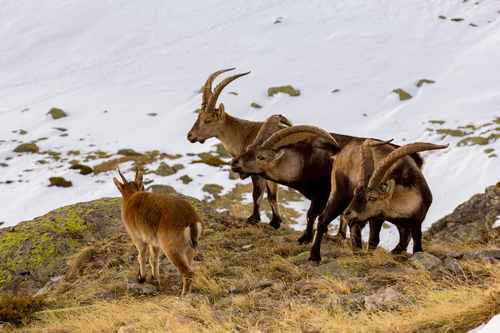
Iberian Ibex
Capra pyrenaica
An icon of the Spanish mountains, the Iberian Ibex is a breathtaking acrobat of the cliffs. Known for the massive, sweeping horns of the males and their incredible climbing ability, they are the undisputed kings of the Peninsula's rugged peaks.
Quick Identification
Size
Length: 100-140 cm (39-55 in); Shoulder height: 65-75 cm (26-30 in); Weight: 35-110 kg (77-242 lbs)
Colors
Greyish-brown to ochre fur. Males feature striking black markings on the legs, chest, and flanks that darken and expand with age; females are lighter and lack these dark patches.
Key Features
- Large scimitar-shaped horns with distinct ridges (males)
- Strong, stocky build with short, powerful legs for climbing
- Distinctive black 'stockings' and flank stripes on mature males
- Small, pointed ears and a short, dark-tipped tail
When You’ll See Them
Geographic range
Where Does the Iberian Ibex Live?
This impressive wild goat is native to the European continent, found exclusively on the Iberian Peninsula. While they were once widely distributed across the region, today their core strongholds are located within the mountain ranges of Spain, including the Sierra Nevada, Gredos, and the Pyrenees. Smaller, reintroduced populations are also thriving in parts of Portugal, such as the Peneda-Gerês National Park, marking a successful return to their historic range.
Basemap © OpenStreetMap contributors
Behavior
The Iberian Ibex is a master of the vertical world, spending much of its life navigating steep cliffs and rocky crags where few predators dare to follow. They are highly social animals, though they typically form sexually segregated groups for most of the year: adult males live in bachelor herds, while females and juveniles form their own nurseries. These groups only come together during the late autumn rut, a period marked by dramatic head-clashing displays between competing males fighting for dominance.
While naturally cautious, Iberian Ibex have become somewhat habituated to human presence in popular national parks across Spain, such as the Sierra Nevada or Sierra de Gredos. In these areas, they may graze near hiking trails, but they remain wild animals that rely on their incredible agility to escape threats. Their daily rhythm is dictated by the sun; they are primarily crepuscular, moving from high rocky shelters down to alpine meadows or forest edges to forage during the cooler hours of the morning and evening.
EverydayEarth exclusive
Camera Tips
To capture the Iberian Ibex on camera, location is everything. Focus your setup on natural bottlenecks such as narrow rocky passes or near established mineral licks. Because these animals are exceptionally agile, don't just look at the ground; consider mounting cameras on a slight downward angle from a higher rock face to capture them as they traverse steep ledges. If you are near a water source in an arid region, this is often the most reliable spot during the hot summer months when they must descend to drink.
Regarding camera settings, a fast trigger speed is essential. Ibex can move with surprising bursts of speed when startled or during the rutting season. Set your camera to burst mode (3-5 photos per trigger) to capture the dynamics of their movement, especially if you hope to record the iconic clashing of horns. High-resolution video is also recommended to capture the subtle social cues and the impressive way they navigate near-vertical terrain with absolute confidence.
For the best lighting and most frequent activity, ensure your camera is active during the 'golden hours'—the first and last few hours of daylight. In the winter months, especially during the November and December rut, the males are more active throughout the day and their dark markings are at their most vivid, providing high-contrast images against snowy or rocky backgrounds. Avoid using heavy scents or baits; instead, look for 'rubbing trees' or rocks where males have left their scent to mark territory, which will naturally attract other curious ibex to the frame.
Similar Species
Species that look similar or are commonly confused with Iberian Ibex.
Frequently Asked Questions
Record Iberian Ibex at your habitat
Connect a camera to start building your own species record — AI identifies every visitor automatically.