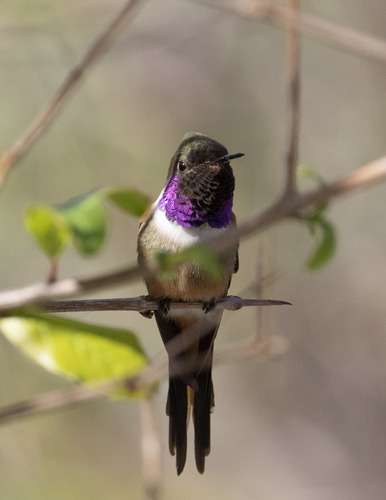
Inagua Woodstar
Nesophlox lyrura
Meet the jewel of the southern Bahamas. With its stunning violet crown and unique lyre-shaped tail, the Inagua Woodstar is a master of aerial dance found nowhere else on Earth.
Quick Identification
Size
Length 7.5-8.2 cm (3-3.2 inches); wingspan approx 10 cm (4 inches); weight 2.5-3 grams (0.09-0.11 oz)
Colors
Males have an iridescent violet-purple crown and throat, white breast, and green upperparts. Females have green upperparts and buffy or cinnamon-tinged underparts.
Key Features
- Lyre-shaped outer tail feathers in males
- Iridescent violet-purple forehead and throat on males
- Small, slightly decurved black bill
- Distinctive white spot behind the eye
When You’ll See Them
Geographic range
Where Does the Inagua Woodstar Live?
The Inagua Woodstar is a Caribbean treasure, found exclusively in the southernmost district of the Bahamas. This island endemic makes its home specifically on the islands of Great Inagua and Little Inagua, never venturing naturally to the northern Bahamian islands or the mainland. Within this tiny geographic footprint, it thrives across various landscapes, from the salty margins of the interior lakes to the lush flowering gardens of Matthew Town.
Basemap © OpenStreetMap contributors
Behavior
The Inagua Woodstar is a highly energetic and territorial hummingbird known for its remarkable aerial acrobatics. Males are particularly famous for their courtship displays, where they fly in high, u-shaped arcs while making a mechanical 'twanging' sound with their specialized tail feathers. These birds are generally solitary outside of the breeding season and will fiercely guard a favorite nectar source from other hummingbirds and even larger insects.
In backyard settings, they are curious but quick, often hovering for a few seconds to inspect new objects before darting away. They have a characteristic 'pumping' motion with their tails while hovering. Despite their small size, they are incredibly hardy, having adapted to the relatively arid conditions of the southern Bahamas where they are the dominant hummingbird species.
EverydayEarth exclusive
Camera Tips
To capture the Inagua Woodstar on camera, focus on high-speed triggers. Because these birds move with incredible velocity, a camera with a fast shutter speed or a specialized 'bird detection' AI mode is essential. Place your camera approximately 3 to 5 feet away from a reliable nectar source, such as a hummingbird feeder or a patch of Aloe vera or Hibiscus. Since these birds are low-flyers in the scrub, mounting your camera at chest height (around 4-5 feet) often yields the most intimate eye-level shots.
Lighting is the most critical factor for showcasing the male's iridescent violet plumage. Position your camera so the sun is behind it, illuminating the bird's throat as it faces the lens; without direct light, the vibrant purple will appear black. Early morning light—the first two hours after sunrise—provides the best 'golden hour' glow without the harsh shadows of the tropical midday sun.
For the best results, use a 'burst' or 'photo-trap' setting that takes multiple images in quick succession. This increases your chances of catching the male's unique 'lyre' tail feathers spread open. If using video, a high frame rate (60fps or higher) is recommended so you can playback their rapid wingbeats in slow motion. Avoid placing cameras in high-wind areas, as the motion of surrounding leaves can trigger false recordings and the birds prefer sheltered feeding spots.
Similar Species
Species that look similar or are commonly confused with Inagua Woodstar.
Frequently Asked Questions
Record Inagua Woodstar at your habitat
Connect a camera to start building your own species record — AI identifies every visitor automatically.