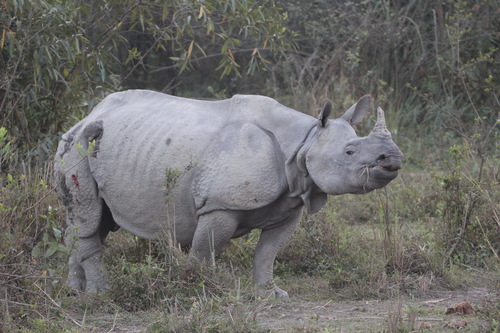
Indian Rhinoceros
Rhinoceros unicornis
The Indian Rhinoceros is a prehistoric-looking marvel of the Asian floodplains, famously known for its single horn and armor-like skin. As the largest of the Asian rhino species, it is a resilient symbol of conservation success in the tall grasslands of India and Nepal.
Quick Identification
Size
3.1–3.8 m (10–12.5 ft) in length; 1,600–2,200 kg (3,500–4,850 lbs) in weight
Colors
Dull silver-grey to brownish-grey skin with pinkish-red tones visible within the deep skin folds
Key Features
- Single black horn on the snout up to 60 cm long
- Thick skin folds resembling plates of armor
- Wart-like bumps on the upper legs and shoulders
- Prehensile upper lip for grasping tall grass
When You’ll See Them
Geographic range
Where Does the Indian Rhinoceros Live?
The Indian Rhinoceros is native to the northern Indian subcontinent, historically ranging across the entire Indo-Gangetic Plain. Today, its presence is concentrated in the fertile floodplains of the Brahmaputra, Indus, and Ganges rivers. Its core population resides in the Indian state of Assam, specifically within Kaziranga National Park, with smaller, vital populations found in the Terai grasslands of southern Nepal.
Basemap © OpenStreetMap contributors
Behavior
Despite their bulky appearance, these rhinos are incredibly agile and can reach speeds of 55 km/h (34 mph) when charging or fleeing. They are excellent swimmers and can feed on submerged aquatic plants. While generally shy, they are known to be protective of their territory and calves, sometimes reacting aggressively if startled in the tall elephant grass that characterizes their habitat.
EverydayEarth exclusive
Camera Tips
Capturing the 'armored giant' on camera requires a strategic focus on their habitual movement patterns. The most effective locations for trail cameras are near 'latrines'—communal dung heaps that rhinos visit repeatedly to mark their territory. Placing a camera 10–15 feet away from these sites ensures you capture the animal's full profile as it approaches. Additionally, river crossings and well-worn 'rhino tunnels' through tall elephant grass are excellent bottlenecks for high-quality footage.
Because Indian Rhinos are massive, mount your camera higher than you would for a deer or leopard. A height of 4 feet (1.2 meters) is ideal to capture the horn and facial features without the animal appearing as just a grey wall of skin. Use a wide-angle lens setting if your camera supports it, as these animals often walk very close to trail paths. Given their thick skin doesn't dissipate heat like smaller mammals, ensure your PIR (Passive Infrared) sensor sensitivity is set to 'High' to ensure the camera triggers even if the temperature difference between the rhino and the background is minimal.
In the humid, swampy environments these rhinos call home, equipment maintenance is key. Use high-quality desiccant silica gel packs inside your camera housing to prevent lens fogging during the early morning hours when rhinos are most active. If you are placing cameras in a region with high elephant activity as well, consider using a protective steel 'bear box' or security housing, as curious rhinos or elephants may rub against the camera and inadvertently damage or move it.
Similar Species
Species that look similar or are commonly confused with Indian Rhinoceros.
Javan Rhinoceros
Much smaller in size and found only in Indonesia; the skin folds are less pronounced and the 'saddle' fold is shaped differently.
Black Rhinoceros
Native to Africa, it has two horns and lacks the heavy, plate-like skin folds of the Indian species.
White Rhinoceros
The largest rhino species, found in Africa; it has two horns and a much broader, square-shaped mouth for grazing.
Frequently Asked Questions
Record Indian Rhinoceros at your habitat
Connect a camera to start building your own species record — AI identifies every visitor automatically.