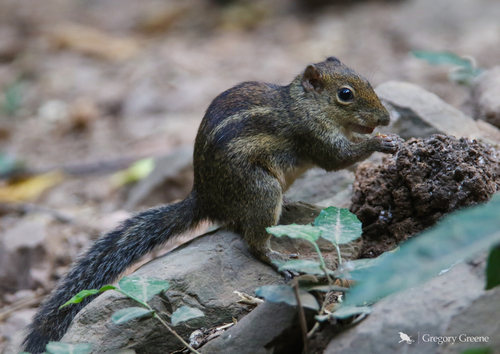
Indochinese Ground Squirrel
Menetes berdmorei
A master of the forest floor, the Indochinese Ground Squirrel is easily recognized by its long, pointed snout and striking side stripes. Thriving in the gardens and fields of Southeast Asia, this busy forager brings a dash of wild energy to any backyard camera setup.
Quick Identification
Size
Head-body length 17-22 cm (6.7-8.7 in); tail 14-18 cm (5.5-7.1 in); weight 180-250g (6.3-8.8 oz)
Colors
Olive-brown to grizzled grey upperparts with a pale white or yellowish belly. Features a distinctive set of stripes on the flanks: typically a bold black stripe sandwiched between two light cream stripes.
Key Features
- Long, pointed muzzle similar to a shrew or rat
- Distinctive black and cream longitudinal stripes on the flanks
- Bushy but relatively short tail usually held low
- Strictly terrestrial movement patterns
When You’ll See Them
Geographic range
Where Does the Indochinese Ground Squirrel Live?
The Indochinese Ground Squirrel is a native fixture of the Southeast Asian landscape. Its core territory stretches across the Indochinese Peninsula, including widespread populations in Thailand, Laos, Cambodia, and Vietnam. It is also found in eastern Myanmar and extends northward into the Yunnan province of southern China. It is particularly common in lowland areas where forest meets farmland.
Basemap © OpenStreetMap contributors
Behavior
The Indochinese Ground Squirrel is a highly terrestrial species, rarely seen climbing trees unlike its more arboreal cousins. It spends the majority of its waking hours scurrying across the forest floor or through agricultural fields in search of food. Its movement is characterized by quick, nervous dashes followed by periods of absolute stillness, using its striped flanks to blend into the dappled light of the undergrowth.
These squirrels are typically solitary and maintain a cautious demeanor. When threatened, they emit a sharp whistle before bolting into a nearby burrow or thicket. While naturally shy, they have become quite accustomed to human-modified landscapes and are frequently seen around the edges of gardens, rice paddies, and orchards where food is plentiful.
EverydayEarth exclusive
Camera Tips
To capture high-quality footage of the Indochinese Ground Squirrel, camera placement is critical. Because they are strictly ground-dwellers, mount your camera no higher than 20 centimeters (8 inches) off the ground. Aim the lens at a cleared patch of earth near a brush pile or garden edge. These squirrels follow predictable "runways" through the grass, so look for small, flattened paths in the vegetation to find the perfect spot.
Baiting is highly effective for this species. A small pile of sunflower seeds, cracked corn, or even a few slices of banana will entice them to stop and forage, giving your camera time to trigger. Since they are wary, try to place the bait near a piece of cover—like a log or a dense shrub—so the squirrel feels safe enough to linger in front of the lens.
Lighting is your best friend for identifying this species. Position your camera so it faces north or south to avoid direct sun flare, but try to capture an area that receives bright, indirect morning light. This will highlight the characteristic side stripes, which are the primary way to distinguish them from other small mammals in your yard. Set your device to a fast trigger speed or a short video mode, as they move with rapid, jerky motions that can easily result in motion blur.
Similar Species
Species that look similar or are commonly confused with Indochinese Ground Squirrel.
Frequently Asked Questions
Record Indochinese Ground Squirrel at your habitat
Connect a camera to start building your own species record — AI identifies every visitor automatically.