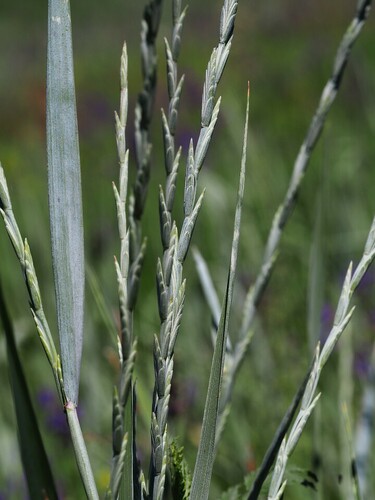
Intermediate Wheatgrass
Thinopyrum intermedium
A resilient, blue-green beauty of the prairie, Intermediate Wheatgrass is a perennial powerhouse that provides year-round structure and vital food for backyard visitors.
Quick Identification
Size
Grows 60–120 cm (24–48 inches) in height with seed heads reaching up to 25 cm (10 inches) in length.
Colors
Distinctive glaucous blue-green to bright green foliage; seed heads turn golden-brown as they mature.
Key Features
- Sod-forming perennial with creeping underground rhizomes
- Long, slender seed heads with spikelets arranged in a zig-zag pattern
- Stiff, upright stems that often remain standing throughout the winter
- Waxy, blue-green coating on the leaves and stems that rubs off easily
When You’ll See Them
Behavior
During the mid-summer months, the grass sends up tall, architectural seed heads that resemble common wheat but are more slender. These stalks provide structural variety in a backyard landscape and serve as important perches for dragonflies and small songbirds. As a 'sod-former,' it spreads slowly through its rhizomes, creating a thick carpet of blue-green blades that provides essential cover for ground-nesting animals.
EverydayEarth exclusive
Camera Tips
Lighting is your best friend when filming this species. Position your camera so that the rising or setting sun 'backlights' the seed heads. The fine hairs and waxy coating on the grass will catch the light, creating a glowing halo effect that looks professional and artistic. This is also the best time to catch insects like grasshoppers or ladybugs climbing the stems, which adds an element of action to your plant photography.
If your goal is to capture the wildlife that visits the grass, place your camera about 2 feet off the ground, angled slightly upward. Intermediate Wheatgrass is a magnet for small granivorous birds like sparrows and finches once the seeds mature in late summer. Use a high-speed trigger setting to capture the birds as they cling to the swaying stalks to feed. In winter, keep the camera active; the dried stalks often stand above the snow, providing a critical food source and a great backdrop for winter bird photography.
Avoid placing the camera in areas with too much competing foliage that might obscure the unique zig-zag pattern of the wheatgrass spikelets. For the sharpest detail, ensure your camera's focus is locked on a specific cluster of seed heads. If your AI camera supports 'Pet' or 'Bird' detection, it will likely trigger frequently in this habitat, so consider using a large SD card and checking your battery levels often during the peak seeding months of July and August.
Similar Species
Species that look similar or are commonly confused with Intermediate Wheatgrass.
Frequently Asked Questions
Record Intermediate Wheatgrass at your habitat
Connect a camera to start building your own species record — AI identifies every visitor automatically.