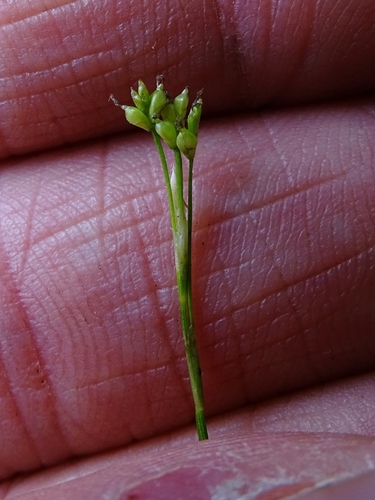
ivory sedge
Carex eburnea
Meet the Ivory Sedge, a delicate 'bristleleaf' that transforms rocky, shaded corners into soft emerald carpets. With its hair-thin foliage and glowing ivory base, it is the understated elegant of the North American woodland.
Quick Identification
Size
Stands 4–12 inches (10–30 cm) tall; forms dense clumps 6–12 inches (15–30 cm) wide.
Colors
Emerald to lime green foliage with distinct ivory or translucent-white sheaths at the base; dark brown flower scales.
Key Features
- Extremely fine, hair-like leaves less than 1mm wide
- Distinctive ivory or pale tan leaf sheaths at the plant's base
- Dense, tufted 'mop-head' growth habit
- Small, inconspicuous flower spikes on stems shorter than the leaves
When You’ll See Them
Behavior
Ivory sedge is a slow-growing, perennial woodland plant that behaves as a 'living mulch.' Unlike many aggressive garden grasses, it grows in polite, non-invasive clumps that gradually expand via short underground rhizomes. It is a tough survivor, often found clinging to limestone cliffs or nestled under the deep shade of coniferous trees where few other plants can thrive.
Ecologically, this sedge provides essential structure to the forest floor. Its dense, fine foliage offers a soft habitat for ground-dwelling invertebrates and small amphibians. While it doesn't 'move' in the traditional sense, its leaves are incredibly responsive to the wind, creating a shimmering, fluid effect in the understory. It is remarkably drought-tolerant once established and maintains its green color well into the winter months in many climates.
EverydayEarth exclusive
Camera Tips
Capturing the Ivory Sedge on a trail camera or backyard lens requires a focus on texture and light. Because the leaves are as thin as hair, standard motion-activated cameras may not trigger unless a bird or small mammal moves through the foliage. To get the best shots, use a camera with a macro setting or a close-focusing lens. Position your camera on a low-profile mount or mini-tripod, just 5 to 8 inches off the ground. A 45-degree downward angle is ideal to showcase the fountain-like spray of the leaves and the ivory-colored base that gives the plant its name.
Time-lapse photography is the secret weapon for this species. Set your camera to take a photo every 15 minutes during the spring thaw (March through May). This captures the 'greening up' process and the rapid emergence of its tiny, delicate flower spikes which are easily missed by the naked eye. If you are using an AI-powered camera like those featured on EverydayEarth, position the plant in the corner of the frame to act as a natural 'stage.' The soft texture of the sedge makes a beautiful, non-distracting background for capturing footage of ground-feeding birds or chipmunks.
Lighting is critical for the Ivory Sedge. The 'ivory' sheaths at the base are translucent and glow beautifully when back-lit by the morning sun. Avoid using a direct, heavy flash at night, as the thin leaves can easily overexpose and look like white static. Instead, look for spots where dappled sunlight hits the forest floor. If your camera allows for manual adjustment, use a fast shutter speed; because these leaves are so light, they catch the slightest breeze and can appear blurry in standard auto-mode photos on windy days.
Similar Species
Species that look similar or are commonly confused with ivory sedge.
Frequently Asked Questions
Record ivory sedge at your habitat
Connect a camera to start building your own species record — AI identifies every visitor automatically.