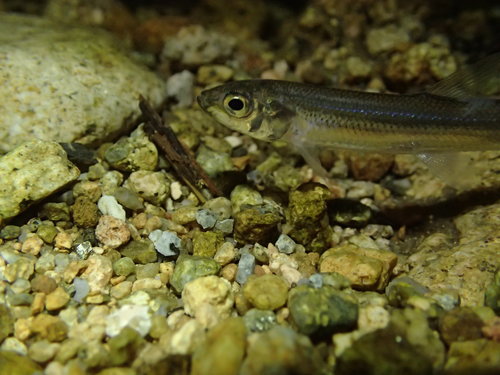
Japanese Pond Smelt
Hypomesus nipponensis
A shimmering marvel of temperate waters, the Japanese Pond Smelt is a master of the silver school. Known for its translucent beauty and seasonal migrations, this resilient fish is a cornerstone of both natural ecosystems and cultural fishing traditions.
Quick Identification
Size
Typically 8 to 15 cm (3 to 6 inches) in length; weighing between 10 to 45 grams (0.35 to 1.6 ounces).
Colors
Translucent silver body with a prominent iridescent lateral stripe; fins are generally clear with a subtle yellowish or olive tint on the back.
Key Features
- Distinctive silver stripe along the midline
- Small adipose fin between dorsal and tail fins
- Translucent, slender body shape
- Deeply forked caudal tail fin
When You’ll See Them
Geographic range
Where Does the Japanese Pond Smelt Live?
Native to the cool temperate regions of East Asia, the Japanese Pond Smelt is found throughout the lakes and coastal estuaries of northern Honshu and Hokkaido in Japan, as well as the Korean Peninsula and the Russian Far East, including Sakhalin. Outside of its native range, it has been successfully introduced to various waterways in the United States, most notably the San Francisco Delta and several high-altitude reservoirs in California, where it has established self-sustaining populations.
Basemap © OpenStreetMap contributors
Behavior
The Japanese Pond Smelt, frequently called the Wakasagi, is a highly social schooling fish that spends much of its life in constant motion. They exhibit a diel vertical migration pattern, meaning they typically reside in deeper, cooler waters during the bright daylight hours to avoid predators and then ascend to the surface at night to feed on planktonic organisms. This movement makes them a dynamic part of the aquatic food web.
During the spawning season, which occurs in early spring as ice begins to melt, these fish undergo a significant behavioral shift. They congregate in massive numbers and move into shallower waters, river mouths, or sandy shorelines to deposit their eggs. While they are naturally skittish and sensitive to vibrations or sudden shadows, their sheer numbers during schooling can make them appear quite bold to an underwater observer.
EverydayEarth exclusive
Camera Tips
Capturing the Japanese Pond Smelt requires a specialized approach since they are entirely aquatic. For backyard enthusiasts with a natural pond or those living near a lake, a submersible action camera or a dedicated underwater AI camera is essential. Position the camera at a depth of 0.5 to 1.5 meters, facing toward a sandy or gravelly clearing. Because Smelt are schooling fish, one successful capture often results in dozens of individuals filling the frame.
Timing is critical for the best footage. These fish are highly phototactic, meaning they are attracted to light. Using a low-intensity, soft-glow underwater LED light during the twilight hours can act as a natural 'lure,' drawing schools into the camera's field of view. Avoid bright, flashing lights, as these will trigger a flight response. Setting your camera to record at 60 frames per second (fps) or higher is recommended to capture their quick, darting movements without motion blur.
During the spring spawning run, move your camera to very shallow water (less than 30 cm) near the shoreline or a stream inlet. This is when the fish are most concentrated and least concerned with external movement. Ensure the lens is cleaned of algae and debris regularly, as the silver scales of the Smelt reflect light brilliantly, and any smudge on the lens will cause significant flare in the recording.
If you are using a trail camera from above the water, look for calm, clear days and use a circular polarizer filter over the lens to cut through the surface reflection. Position the camera on a dock or overhanging branch looking straight down into a known schooling area. While you won't get the same detail as an underwater shot, you can capture the fascinating 'shimmer' effect of a large school moving in unison.
Similar Species
Species that look similar or are commonly confused with Japanese Pond Smelt.
Delta Smelt
The Delta Smelt is native only to the California Delta and typically has a translucent blue sheen rather than the yellowish tint often seen on Pond Smelt.
Surf Smelt
Surf Smelt are larger and have a much smaller mouth, and they are typically found in saltwater surf zones rather than calm freshwater ponds.
Frequently Asked Questions
Record Japanese Pond Smelt at your habitat
Connect a camera to start building your own species record — AI identifies every visitor automatically.