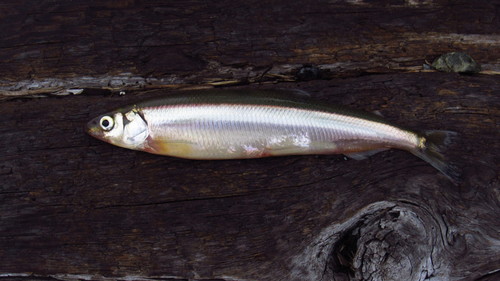
Surf Smelt
Hypomesus pretiosus
The silver ghost of the Pacific shoreline, the Surf Smelt is famous for its shimmering spawning displays in the heart of the breaking waves.
Quick Identification
Size
8.75 to 10 inches (22–25 cm); weight averages 1.6 oz (45 g)
Colors
Olive to light green on the back with silvery-white bellies; a prominent iridescent silver or purple stripe runs along the side
Key Features
- Slender, elongated body
- Small adipose fin present between dorsal and tail fins
- Upper jaw extends just to the front edge of the pupil
- Fine, sand-like scales that easily rub off
When You’ll See Them
Behavior
Surf Smelt are remarkable for their unique "surf-spawning" behavior. Unlike many marine fish that spawn in the deep ocean, these silver-sided travelers move into the shallowest wash of the waves to deposit their eggs in the sand and fine gravel. This usually occurs during high tide cycles, where they dance in the frothing water to ensure their eggs are buried safely away from many marine predators.
They are highly social, schooling fish that move in massive numbers. This makes them a cornerstone of the Pacific coastal food web, providing a vital energy source for seabirds, seals, and larger predatory fish. While they are sensitive to human disturbance on spawning beaches, they are often seen by coastal residents as shimmering flashes in the surf during the summer months.
EverydayEarth exclusive
Camera Tips
Capturing Surf Smelt requires a different approach than terrestrial wildlife. For those with beachfront property, the best method is to use an underwater action camera or a high-end trail camera with an IP68 waterproof rating. Secure the camera to a weighted base or a heavy piece of driftwood at the low-tide line, facing toward the shore. As the tide comes in, the camera will be submerged in the 'sweet spot' where smelt congregate to spawn.
Timing is critical. Focus your recording efforts around the highest tides of the month, particularly during the new or full moons in the summer. If you are using an AI-powered camera above the water, look for 'bird frenzy' triggers. Gulls and terns diving into the shallows are a surefire indicator that a school of smelt is present. Use a high frame rate (60fps or higher) to capture the rapid, shimmering movement of the school without motion blur.
If mounting a camera above the water on a pier or bulkhead, use a circular polarizer filter to cut through the surface glare. This allows the camera to see into the water column more clearly. Position the camera at a 45-degree angle to the water surface for the best balance of visibility and reflection reduction. Because smelt are silvery and highly reflective, avoid using high-intensity artificial lights at night, which can startle the school and cause 'washout' in your footage.
Similar Species
Species that look similar or are commonly confused with Surf Smelt.
Longfin Smelt
The Longfin Smelt has much larger pectoral fins that reach nearly to the base of the pelvic fins.
Northern Anchovy
Anchovies have a much larger mouth that extends well past the back of the eye and lack the adipose fin found on smelt.
Eulachon
Also known as Candlefish, these have distinct ridges on their gill covers which Surf Smelt lack.
Frequently Asked Questions
Record Surf Smelt at your habitat
Connect a camera to start building your own species record — AI identifies every visitor automatically.