Laced Moray
Gymnothorax favagineus
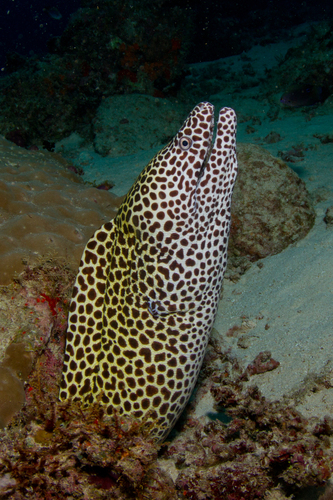
The Laced Moray is the stunning 'leopard' of the ocean, draped in a high-contrast honeycomb pattern that provides perfect camouflage among the shadows of the reef. This majestic, nocturnal predator is a cornerstone of Indo-Pacific marine ecosystems, captivating observers with its size and serpentine elegance.
Quick Identification
Size
Length of 1.5–3 metres (5–10 feet); weight can exceed 30 kg (66 lbs)
Colors
White to creamy-yellow base covered in a high-contrast 'laced' or 'honeycomb' pattern of black or dark brown polygonal spots
Key Features
- Distinctive black honeycomb-like spots on a white or yellow body
- Blunt, rounded snout with large, visible nostrils
- Massive, powerful jaws often seen gaping
- Dorsal fin starts near the head and runs the length of the body
When You’ll See Them
Geographic range
Where Does the Laced Moray Live?
The Laced Moray is a widespread resident of the tropical Indo-West Pacific region. Its vast territory begins along the eastern coast of Africa and the Red Sea, stretching across the Indian Ocean to include the Maldives and the Andaman Sea. It is commonly found throughout the waters of Southeast Asia, including Indonesia and the Philippines, and extends its reach as far north as southern Japan and as far south as the Great Barrier Reef in Australia. While it is most concentrated in these primary reef systems, it does not typically migrate, maintaining a stable presence in its native tropical waters year-round.
Basemap © OpenStreetMap contributors
Behavior
The Laced Moray is a largely sedentary predator that spends much of its daylight hours tucked into the crevices and caves of coral reefs. While its habit of constantly opening and closing its mouth may look threatening to human observers, this is actually a respiratory necessity, as the eel must pump water over its gills to breathe. They are generally solitary creatures, though they are occasionally seen sharing a large crevice with other morays or even cleaner shrimp, which provide a vital service by removing parasites from the eel's skin and mouth.
As nocturnal hunters, Laced Morays become much more active after sunset. They rely on an incredibly keen sense of smell rather than sight to locate prey in the dark. Despite their formidable size and sharp teeth, they are not naturally aggressive toward humans and will typically retreat if approached. However, they are highly territorial regarding their chosen crevice and can deliver a powerful, infectious bite if they feel cornered or if a diver mistakenly offers a hand near their lair.
EverydayEarth exclusive
Camera Tips
Capturing a Laced Moray on a 'backyard' reef camera requires specialized underwater housing and a focus on stable mounting. Since these eels are sedentary, the best strategy is to position your camera near a known 'cleaning station' or a deep crevice in the reef framework. Ensure the camera is secured with weighted mounts or marine-grade clamps to prevent it from being moved by currents or curious marine life. Use a wide-angle lens, as these eels can be quite large and you will likely be filming in close quarters.
Because the Laced Moray is most active after dark, lighting is your biggest challenge. Standard white lights can spook the eel or attract unwanted swarms of tiny crustaceans that obscure the view. Instead, utilize infrared or low-intensity red LED lighting, which is less visible to the eel and allows you to capture its natural hunting behavior without causing distress. Set your camera's motion trigger to a high sensitivity, as the slow, serpentine movement of an eel exiting a cave can sometimes fail to trigger less sensitive sensors.
To attract a Laced Moray to a specific frame, you can use scent rather than physical bait. A perforated PVC tube filled with mashed sardines or fish oil, placed just out of the camera's view, will release a 'scent trail' that the eel's sensitive nostrils will follow. This encourages the eel to emerge from its crevice and explore the area in front of your lens. Avoid using loose bait, as this can trigger a feeding frenzy from smaller fish that may hide the eel from view or even damage your equipment.
Similar Species
Species that look similar or are commonly confused with Laced Moray.
Frequently Asked Questions
Record Laced Moray at your habitat
Connect a camera to start building your own species record — AI identifies every visitor automatically.