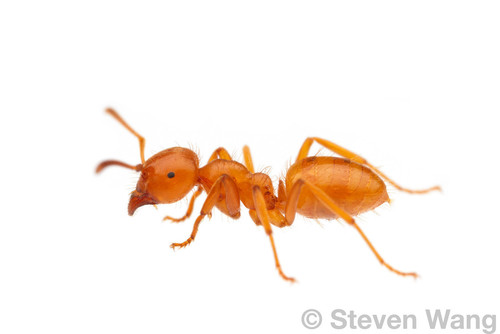
Larger Citronella Ant
Lasius interjectus
Known for their striking golden color and surprising lemon scent, Larger Citronella Ants are the "invisible gardeners" of the backyard. These subterranean specialists spend their lives underground, emerging in spectacular winged swarms that signal the change of seasons.
Quick Identification
Size
Workers: 4–4.5 mm (0.16–0.18 in); Queens: 7–8 mm (0.28–0.31 in)
Colors
Vibrant lemon-yellow to golden-orange; queens are darker reddish-brown with smoky wings
Key Features
- Bright yellow-orange coloration
- Strong citronella or lemon scent when crushed
- Small eyes relative to head size
- Smooth, shiny body with minimal hair
When You’ll See Them
Geographic range
Where Does the Larger Citronella Ant Live?
Native to the North American continent, the Larger Citronella Ant is widely distributed across the temperate regions of the United States. Its core range extends from the Atlantic coast westward through the Great Plains, reaching as far north as southern Canada. These ants are particularly abundant in the eastern and midwestern U.S., where they thrive in both suburban landscapes and open woodland edges with well-drained soil.
Basemap © OpenStreetMap contributors
Behavior
Larger Citronella Ants are fascinating subterranean insects known primarily for the distinct lemon-like scent they emit as a defense mechanism. Unlike many other common garden ants, they rarely forage above ground, preferring to spend their lives tending to "underground livestock"—root-feeding aphids and mealybugs—to harvest honeydew. This hidden lifestyle means they often go unnoticed by homeowners until a major event occurs.
These ants are most commonly encountered during their spectacular mating flights, usually in late summer or autumn. Large numbers of winged reproductives (alates) emerge from the soil simultaneously, often near building foundations or under patio stones. While they are sometimes mistaken for termites due to this behavior, they are completely harmless to structures and do not bite or sting humans, though they can be a temporary nuisance when swarming indoors.
EverydayEarth exclusive
Camera Tips
Capturing the Larger Citronella Ant on camera requires a bit of strategy because they spend the vast majority of their lives underground. The best time to catch high-activity footage is during their nuptial flights, which typically occur from mid-summer to early autumn. Look for "boiling" activity near sidewalk cracks, foundation walls, or large flat rocks after a heavy rain. Set your camera on a macro setting or use a close-up lens attachment, positioning it just 2–4 inches from the ground to capture the winged queens and males emerging in a chaotic golden mass.
If you aren't catching a swarm, your best bet is a "passive discovery" setup. Carefully flip over a large, flat landscaping stone or a rotting log in a shaded part of your yard. If Citronella Ants are present, you will see a flash of bright yellow workers scurrying to move their larvae. Place your camera on a small tripod or beanbag at ground level immediately after revealing the colony. Because these ants are sensitive to light and temperature changes, they will disappear back into the soil within minutes, so have your gear ready before you lift the stone to capture the frantic relocation behavior.
For those using AI-powered trail cameras, focus on low-angle placements near high-moisture areas. While they aren't attracted to traditional sugar baits as much as other ants (since they prefer root aphid honeydew), they may investigate protein-based baits like a small smear of canned tuna or wet cat food. Ensure your camera is set to a high frame rate (60fps) or high-resolution video mode to capture their rapid movements and the delicate, iridescent wings of the reproductives during swarming season. Directing a flashlight at a 45-degree angle can help highlight their shiny, translucent bodies against the dark soil.
Similar Species
Species that look similar or are commonly confused with Larger Citronella Ant.
Frequently Asked Questions
Record Larger Citronella Ant at your habitat
Connect a camera to start building your own species record — AI identifies every visitor automatically.