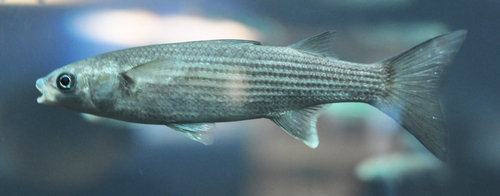
Leaping Mullet
Chelon saliens
Famed for its spectacular aerial displays and shimmering silver scales, the Leaping Mullet is a dynamic visitor to coastal backyards and estuaries. This fast-moving schooler brings a burst of energy to shorelines across the Mediterranean and Atlantic.
Quick Identification
Size
Typically 25–35 cm (10–14 in) in length, reaching a maximum of about 40 cm (16 in); weight ranges from 0.5 to 1.1 kg (1.1–2.4 lbs).
Colors
Silvery-grey on the back with lighter silver sides and a white belly; features 5–7 dark longitudinal stripes and a distinct golden-yellow spot on the gill cover.
Key Features
- Pointed snout with a small, narrow mouth
- Bright golden-yellow spot on the operculum (gill cover)
- Streamlined, torpedo-shaped body
- Propensity for jumping high out of the water when disturbed
When You’ll See Them
Geographic range
Where Does the Leaping Mullet Live?
The Leaping Mullet is native to the temperate and subtropical waters of the Northeast Atlantic, spanning from the coast of France down to Morocco. It is exceptionally common throughout the Mediterranean and Black Seas, where it frequents shallow coastal zones. Additionally, this hardy species was successfully introduced to the Caspian Sea in the early 20th century, where it has since established a thriving, permanent population.
Basemap © OpenStreetMap contributors
Behavior
The Leaping Mullet is a highly active and social species, often found in large, fast-moving schools. They are best known for their remarkable aerial acrobatics; they frequently leap clear out of the water, a behavior thought to help them evade predators, clear their gills of silt, or perhaps even communicate with the school. Unlike many other fish, they are euryhaline, meaning they are equally comfortable in the high salinity of the open ocean and the brackish waters of coastal lagoons and estuaries.
These fish are generally shy and easily spooked by sudden movements or shadows. In backyard coastal settings, such as private docks or canal-side properties, they can be observed grazing on the algae that grows on pilings. They are diurnal, spending the daylight hours foraging and moving with the tides. While they do not interact directly with humans, their presence is a good indicator of a healthy, oxygenated aquatic ecosystem.
EverydayEarth exclusive
Camera Tips
To capture the Leaping Mullet’s namesake behavior, you’ll need a camera with a very fast trigger speed and high frame rate. Position your camera on a tripod at the edge of a pier or dock, aimed at a 45-degree angle toward the water's surface where the school is congregating. Since their leaps are unpredictable, using a 'Pre-Roll' or 'Loop Recording' feature is essential to ensure you don't miss the split-second action.
For those using underwater AI cameras, placement is key. Secure the camera to a dock piling or a weighted base in shallow water (1-2 meters deep) during a rising tide. Mullets are attracted to structure where algae is abundant. Aim the lens toward the sun or a well-lit area to highlight the silver sheen of their scales and the golden spot on their gill covers, which is their most identifying feature.
While mullets are notoriously difficult to catch on traditional bait, you can lure them into your camera’s field of view by 'chumming' the water with fine breadcrumbs or a specialized cloud-forming groundbait. This creates a feeding frenzy that keeps the school stationary in front of the lens. The best time for filming is during mid-tide on a sunny day, as the light penetration helps the AI distinguish the fish from the murky bottom sediment.
Similar Species
Species that look similar or are commonly confused with Leaping Mullet.
Frequently Asked Questions
Record Leaping Mullet at your habitat
Connect a camera to start building your own species record — AI identifies every visitor automatically.