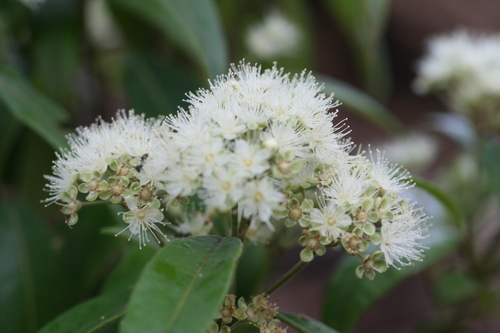
Lemon myrtle
Backhousia citriodora
Known as the 'Queen of the Lemon Herbs,' the Lemon myrtle is a stunning Australian native famous for its intoxicating citrus scent and snowy summer blooms. It is a vital hub for pollinators and a fragrant addition to any subtropical backyard.
Quick Identification
Size
Grows 8–20 metres (26–66 feet) in the wild, though typically remains a smaller shrub of 3–5 metres (10–16 feet) in backyard gardens.
Colors
Glossy dark green foliage with lighter undersides; produces profuse clusters of creamy-white flowers.
Key Features
- Intense lemon fragrance when leaves are crushed
- Lance-shaped, glossy green leaves with elegant pointed tips
- Abundant clusters of small, feathery white flowers
- Dense, evergreen canopy providing year-round shade
When You’ll See Them
Geographic range
Where Does the Lemon myrtle Live?
Native to the Australian continent, the Lemon myrtle is a quintessential resident of the subtropical rainforests found in central and south-eastern Queensland. Its natural distribution hugs the coastline, stretching from the tropical surrounds of Mackay down through the scenic hinterlands to the northern reaches of Brisbane. While it has become a global favorite in temperate and subtropical gardens across Europe and North America, its wild heart remains firmly rooted in the moist, sheltered gullies of the Australian East Coast.
Basemap © OpenStreetMap contributors
Behavior
Lemon myrtle is a resilient and long-lived evergreen that serves as a cornerstone of the subtropical rainforest ecosystem. In its natural environment, it grows as a mid-canopy tree, but it has adapted beautifully to suburban life, where it is often used as a fragrant hedge or a stand-alone feature tree. It is famously known for having the highest purity of citral among all known plant species, even surpassing lemons and lemongrass.
In a backyard setting, this species is relatively slow-growing but provides excellent structural value. It interacts with the local environment by acting as a significant nectar source during its flowering period. Unlike many ornamental plants, the Lemon myrtle is quite hardy once established, tolerating a range of light conditions, though it performs best when protected from the harshest afternoon sun and strong, drying winds.
EverydayEarth exclusive
Camera Tips
To capture the best footage of a Lemon myrtle, place your camera at chest height or slightly lower to frame the dense clusters of creamy-white flowers that emerge in summer. This plant is a significant draw for local wildlife, so aim your lens at a branch with plenty of flower buds. Using a macro lens or a close-focus setting on your trail camera will help reveal the delicate, star-like stamens of the blossoms and the visiting insects that frequent them.
Because the flowers are a major nectar source, your camera is likely to record a variety of visitors, including honeyeaters, butterflies, and native bees. Set your camera to a fast trigger speed or high-frame-rate video to capture the rapid movements of these pollinators. If your goal is to document the plant's growth, a time-lapse setting over the spring and summer months can beautifully capture the transition from glossy green foliage to a snowy explosion of flowers.
Be mindful of the lighting when positioning your camera. Lemon myrtle has very glossy leaves that can create significant glare or 'hot spots' in direct midday sunlight. For the best visual results, rely on the soft, dappled light of the early morning or late afternoon. This 'golden hour' lighting accentuates the deep green of the leaves and the soft, feathery texture of the white blooms without washing out the image.
Lastly, consider the impact of the wind. Lemon myrtle branches are flexible and will sway even in a light breeze, which can lead to hundreds of false motion triggers. To avoid filling your SD card with videos of moving leaves, adjust your camera's PIR sensitivity to a medium or low setting, or use a zone-masking feature to focus the trigger area on a stable, woody branch where birds are most likely to perch.
Similar Species
Species that look similar or are commonly confused with Lemon myrtle.
Lemon Scented Gum
A much larger eucalyptus tree with smooth white bark and long, thin leaves rather than the Myrtle's bushy habit.
Cinnamon Myrtle
The leaves have a distinct spicy cinnamon scent rather than citrus, and the flowers are typically more cream-colored.
Anise Myrtle
Features a strong aniseed or licorice scent when crushed and has narrower leaves with a different vein pattern.
Frequently Asked Questions
Record Lemon myrtle at your habitat
Connect a camera to start building your own species record — AI identifies every visitor automatically.