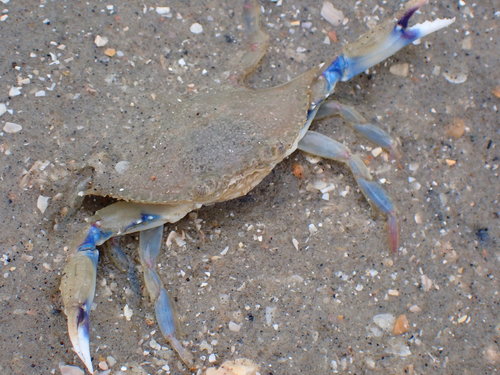
Lesser Blue Crab
Callinectes similis
Meet the Lesser Blue Crab, the smaller and swifter relative of the famous Atlantic Blue Crab. A master of the salt marsh, this feisty crustacean is a frequent visitor to coastal backyard docks and estuaries.
Quick Identification
Size
Carapace width 5-12 cm (2-4.7 inches); weights typically between 50-150 grams
Colors
Mottled olive-green, grayish, or brownish carapace; claws frequently tipped with violet or pale blue; underside is a creamy white
Key Features
- Four teeth between the eye sockets (frontal teeth)
- Granulated or 'bumpy' carapace texture
- Smaller maximum size than common Blue Crabs
- Flattened, paddle-shaped rear legs for swimming
When You’ll See Them
Geographic range
Where Does the Lesser Blue Crab Live?
Native to the Western Atlantic, the Lesser Blue Crab is found from the coastal waters of New Jersey southward through the Gulf of Mexico and into the Caribbean. Its core range includes the Southeastern United States and the Caribbean islands, extending as far south as the coast of Brazil. These crabs thrive in temperate, subtropical, and tropical estuarine systems where salt and fresh water meet.
Basemap © OpenStreetMap contributors
Behavior
The Lesser Blue Crab is a highly energetic and opportunistic inhabitant of the Atlantic coast. Unlike many other crab species that crawl exclusively, these crabs are proficient swimmers, using their specialized rear legs as paddles to navigate the water column. They are generally solitary and quite feisty, known to defend their small patch of seafloor against other crabs. When threatened, they are famous for their 'vanishing act,' using their paddles to kick up sediment and bury themselves in the sand within seconds.
For those with waterfront property or coastal backyards, these crabs are a constant presence in the intertidal zone. They are sensitive to changes in water salinity and temperature, often migrating from shallow estuaries to deeper coastal waters during cold snaps or heavy rainfall. While they don't have the commercial fame of their larger cousins, they play a critical role in the food web as both scavengers and prey for coastal birds and larger fish.
EverydayEarth exclusive
Camera Tips
To capture the Lesser Blue Crab on camera, you will need a waterproof action camera or an underwater housing. The most effective placement is near dock pilings, oyster reefs, or submerged rocky structures where these crabs naturally forage for food. Aim the camera at a slight downward angle toward a flat, sandy patch of the seabed, as this provides a clear background to see the crab's mottled camouflage.
Using a lure is highly recommended to bring the crabs into the frame. A mesh bait bag filled with oily fish, such as menhaden or sardines, works wonders. Secure the bag firmly to a weight or a dock piling about 1.5 to 2 feet in front of the lens. This will not only attract the Lesser Blue Crab but often results in fascinating footage of them using their claws to tear at the bait or wrestling with other crabs for position.
Timing your recording with the tides is more important than the time of day. Set your camera to record during the two hours leading up to high tide, as the rising water brings these crabs into the shallows to hunt. Because the water can be murky in estuaries, try to film during mid-day (10 AM to 2 PM) when sunlight is strongest and can penetrate the water to provide better clarity and natural color for your video.
Similar Species
Species that look similar or are commonly confused with Lesser Blue Crab.
Frequently Asked Questions
Record Lesser Blue Crab at your habitat
Connect a camera to start building your own species record — AI identifies every visitor automatically.