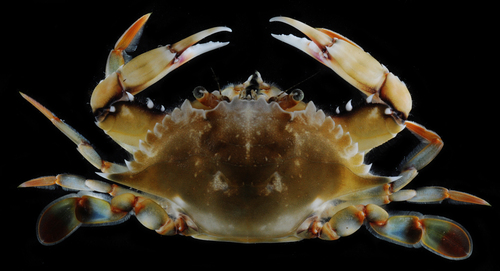
Ornate Blue Crab
Callinectes ornatus
Meet the Ornate Blue Crab, the smaller and more vibrant cousin of the Atlantic Blue Crab. Found dancing through the shallow surf from the Carolinas to Brazil, this agile swimmer is a master of the tropical coastline.
Quick Identification
Size
Maximum carapace width of 93 mm (3.7 in), significantly smaller than the Atlantic Blue Crab.
Colors
Olive or brownish-green carapace; legs and claws feature vibrant blue and reddish-orange highlights; underside is typically creamy white.
Key Features
- Six frontal teeth between the eye sockets
- Vibrant blue and red accents on the swimming legs
- Relatively small size compared to other Callinectes species
- Paddle-shaped fifth pair of legs for swimming
When You’ll See Them
Geographic range
Where Does the Ornate Blue Crab Live?
The Ornate Blue Crab is native to the western Atlantic Ocean, with a core range stretching from North Carolina in the United States, through the Gulf of Mexico and the Caribbean Sea, and extending as far south as southern Brazil. It thrives in tropical and subtropical climates, particularly in coastal regions where the water remains warm and saline. While it shares much of its territory with the Atlantic Blue Crab, it is more commonly found in the saltier waters of the outer estuaries and continental shelf.
Basemap © OpenStreetMap contributors
Behavior
The Ornate Blue Crab is a highly agile swimmer, distinguished by its fifth pair of legs which are flattened into paddle-like oars. Unlike many other crab species that primarily crawl along the bottom, this species spends a significant amount of time actively gliding through the water column. They are known for their aggressive temperament; when confronted, they will quickly rear up and spread their claws in a striking defensive display.
These crabs are primarily solitary and spend much of their time searching for food in high-salinity environments. They are nocturnal to some extent but are frequently seen active during the day, especially when the tide is coming in. They do not migrate long distances but will move between deeper shelf waters and shallow estuaries depending on their life cycle and local water temperature.
EverydayEarth exclusive
Camera Tips
To capture the Ornate Blue Crab on camera, you will need a specialized underwater setup or a camera mounted to a dock or pier overlooking shallow, clear water. Because these crabs are most active in the intertidal zone, the best placement is near submerged structures like dock pilings, jetty rocks, or mangrove roots where they often hunt for food or seek shelter. Aim your camera downward at a 45-degree angle toward a flat, sandy or muddy patch of the seafloor.
Using bait is the most effective way to bring these crabs into your camera's field of view. A mesh bait bag or a small cage containing oily fish, crushed clams, or shrimp works wonders. Secure the bait to a heavy weight or anchor it to a fixed structure so that the crabs (or the tide) don't drag it out of frame. The scent will quickly attract crabs from several meters away, allowing you to record their intricate feeding behaviors and social interactions.
Lighting is a major factor for underwater wildlife photography. During the day, natural sunlight in shallow water (under 2 meters) is usually sufficient. However, to capture their activity during the twilight hours or at night, use a camera equipped with high-intensity infrared LEDs to avoid scaring the crabs with bright white light. Be mindful of water clarity; filming during a calm, incoming tide usually provides the best visibility before the sediment gets stirred up.
Similar Species
Species that look similar or are commonly confused with Ornate Blue Crab.
Frequently Asked Questions
Record Ornate Blue Crab at your habitat
Connect a camera to start building your own species record — AI identifies every visitor automatically.