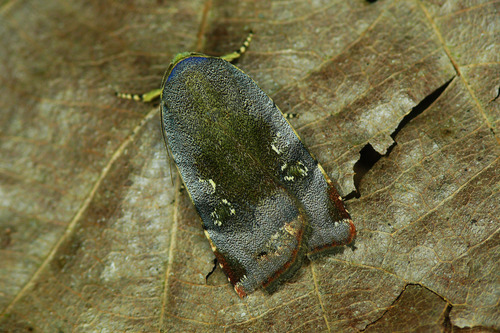
Lesser Broad-bordered Yellow Underwing
Noctua janthe
A master of disguise with a hidden flash of gold, this common garden moth is a nighttime jewel waiting to be discovered by your lens.
Quick Identification
Size
Wingspan of 35–45 mm (1.4–1.8 inches)
Colors
Forewings are variable, ranging from pale clay to deep purplish-brown; hindwings are bright orange-yellow with a wide black border.
Key Features
- Purplish sheen on the forewings in certain light
- Vivid yellow-orange hindwings with a thick black band
- Rests with wings folded flat over the body
- Subtle kidney-shaped and oval markings on the upper wings
When You’ll See Them
Geographic range
Where Does the Lesser Broad-bordered Yellow Underwing Live?
The Lesser Broad-bordered Yellow Underwing is primarily a European species, with its native territory stretching from the British Isles and Scandinavia across to the Mediterranean and North Africa. It is a common sight throughout Central Europe and has a strong presence in the United Kingdom, where it thrives in both rural and urban landscapes. While its core range is Western and Central Europe, it can also be found as far east as the Caucasus, favoring temperate climates with moderate rainfall.
Basemap © OpenStreetMap contributors
Behavior
The Lesser Broad-bordered Yellow Underwing is a nocturnal specialist, spending its daylight hours tucked away in dense vegetation or leaf litter. When disturbed during the day, it employs a clever 'startle' defense: it flashes its brilliant yellow hindwings to confuse a potential predator before quickly diving back into the undergrowth to hide.
As the sun sets, these moths become highly active, visiting a wide variety of garden flowers to feed on nectar. Unlike some more specialist species, they are generalists and are frequently seen in suburban environments. They are strong fliers and are notably attracted to artificial light sources and fermented sugar baits, making them a staple species for backyard observers using light traps or bait stations.
EverydayEarth exclusive
Camera Tips
To capture high-quality images of the Lesser Broad-bordered Yellow Underwing, you should focus your efforts on the peak summer months of July and August. Since these moths are nocturnal, an AI-powered camera with strong infrared (IR) capabilities is essential. However, to see their true colors—especially that signature yellow underwing—consider placing a low-intensity, motion-activated white light near your camera station. This will allow the camera to record in color mode rather than black-and-white IR.
A highly effective way to lure this species into your camera's field of view is 'sugar-roping.' Soak short lengths of thick cotton rope in a fermented mixture of cheap red wine, brown sugar, and treacle, then drape them over a branch or fence post about 4 to 5 feet off the ground. Position your camera on a tripod roughly 12-18 inches away from the rope. Because these moths are relatively small, use a macro lens or adjust your camera’s focal settings to 'close-up' to ensure the wing patterns are sharp and clear.
Set your camera's motion sensitivity to high. Moths move quickly and erratically, so a fast trigger speed is vital. If your camera supports a 'burst mode,' enable it; capturing 3-5 photos in quick succession increases your chances of catching the moth with its wings slightly open, revealing the vibrant yellow that gives the species its name. Avoid placing the camera in areas with heavy wind, as swaying branches will cause false triggers at high sensitivity levels.
Similar Species
Species that look similar or are commonly confused with Lesser Broad-bordered Yellow Underwing.
Frequently Asked Questions
Record Lesser Broad-bordered Yellow Underwing at your habitat
Connect a camera to start building your own species record — AI identifies every visitor automatically.