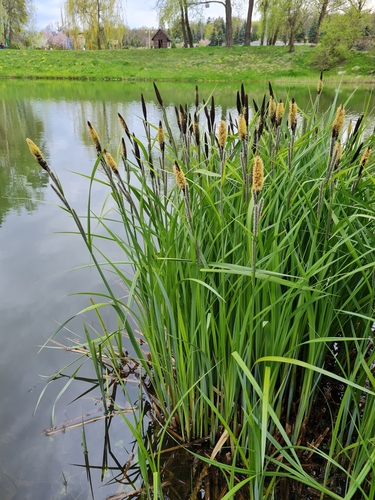
lesser pond sedge
Carex acutiformis
The lesser pond sedge is the architectural backbone of the water's edge, offering shimmering grey-green foliage and essential shelter for wetland wildlife. Its distinctive triangular stems and dark flowering spikes make it a fascinating subject for any backyard pond watcher.
Quick Identification
Size
Typically grows 60–120 cm (24–48 inches) in height with a spread of 50–100 cm (20–40 inches).
Colors
Grey-green (glaucous) foliage; male flower spikes are dark chocolate brown to purplish-black; female spikes are lighter green turning medium brown.
Key Features
- Triangular stems characteristic of sedges
- Rough-textured, M-shaped leaf cross-section
- Separate male and female flower spikes on the same stem
- Vigorous creeping rhizomes for spreading
When You’ll See Them
Behavior
The lesser pond sedge is a resilient, perennial wetland plant that plays a vital role in stabilizing shorelines and filtering water. Unlike many garden plants, it doesn't move on its own, but it is highly dynamic in its growth, spreading aggressively through underground rhizomes to form dense 'monocultures' or stands. These stands provide critical structural habitat for aquatic insects and small mammals.
In the spring, it produces distinct flowering spikes. The male spikes are located at the top of the stem to allow wind to catch the pollen, while the female spikes sit lower down. As the season progresses, the plant provides a sturdy platform for damselflies and dragonflies to perch on while they hunt or mate. In the winter, the foliage dies back but remains standing, offering a golden-brown shelter for overwintering invertebrates.
EverydayEarth exclusive
Camera Tips
When setting up an AI-powered camera to capture lesser pond sedge, placement is key. Position your camera on a short tripod or ground stake about 12-18 inches above the water line. Angle the lens slightly upward to capture the full height of the flower spikes against the sky or a contrasting background. This low-angle perspective not only highlights the 'edges' of the triangular stem but also puts you at the perfect level to catch the water birds and mammals that frequent the sedge beds.
Because plants move in the breeze, they can often trigger motion-based sensors unnecessarily, leading to thousands of empty clips. To combat this, adjust your camera's PIR (Passive Infrared) sensitivity to a lower setting, or better yet, use a 'Time-Lapse' mode. Setting the camera to take a photo every 15-30 minutes during daylight hours allows you to create a stunning visual record of the sedge growing, flowering, and swaying, which is far more rewarding than standard motion clips.
If you are looking to capture wildlife using the sedge as a backdrop, focus your camera on a specific 'opening' or 'trail' within the sedge stand. Water voles, rails, and herons often use these plants as cover. By framing a small clearing surrounded by the grey-green leaves, you create a natural stage. The best time for this is early morning or late evening when the low sun backlights the leaves, making the plant's texture pop on camera.
Don't ignore the lesser pond sedge during the winter months. Even when the plant turns brown and dormant, it remains a focal point for frost and snow. High-contrast winter morning light can make the dried seed heads look spectacular. Ensure your camera is set to a high resolution (4K if available) to capture the intricate details of the frost crystals on the sharp leaf edges.
Similar Species
Species that look similar or are commonly confused with lesser pond sedge.
Frequently Asked Questions
Record lesser pond sedge at your habitat
Connect a camera to start building your own species record — AI identifies every visitor automatically.