Live Long
Lannea discolor
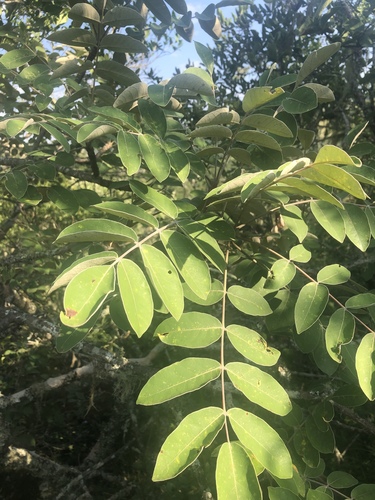
The Live Long tree is a resilient centerpiece of the African landscape, instantly recognizable by its 'discolored' leaves—emerald on top and shimmering silver beneath. It serves as a bustling wildlife hub, offering a seasonal feast that brings the best of backyard nature right to your camera lens.
Quick Identification
Size
A medium-sized tree typically reaching 8–15 meters (26–50 feet) in height with a broad, rounded canopy.
Colors
Dark grey to blackish rough bark; compound leaves are dark green on top with a distinctive silvery-white, velvety underside.
Key Features
- Distinctive bicolored leaves with silvery-white undersides
- Rough, dark grey bark that often peels in rectangular flakes
- Small, star-shaped yellow flowers appearing on bare branches
- Edible reddish-purple fleshy fruits (drupes) about 1 cm in diameter
When You’ll See Them
Behavior
The Live Long tree, so named for its incredible vitality and ability to grow from a simple pole or cutting, is a cornerstone of the savanna ecosystem. As a deciduous species, it undergoes a dramatic transformation throughout the year. In early spring, it is often one of the first trees to signal the change of season, producing clusters of yellowish flowers on bare, architectural branches before the first leaves even emerge. This early blooming makes it a critical early-season nectar source for various insects.
Once in full leaf, the tree provides dense shade, but its most fascinating 'behavior' is ecological. It acts as a seasonal magnet for wildlife. In the summer months, the tree produces a bounty of grape-like fruits that ripen to a dark purple. These fruits are highly sought after by a wide array of species, from birds and monkeys to local human populations. The tree's resilience allows it to thrive in rocky, well-drained soils where other species might struggle, often forming a micro-habitat that supports a high density of backyard biodiversity.
EverydayEarth exclusive
Camera Tips
Capturing the life surrounding a Live Long tree requires a strategy that shifts with the seasons. During the summer fruiting peak (December to February), the best camera placement is within the canopy itself. If you can safely mount your AI camera on a sturdy branch about 2–3 meters (6–10 feet) up, facing a cluster of ripening fruit, you will capture spectacular footage of frugivorous birds like African Green Pigeons, Barbets, and Mousebirds. Angle the camera slightly downward to reduce sky-glare, which can be intensified by the tree’s reflective, silvery leaf undersides.
In the spring (September to October), focus your camera on the bare ends of the branches. This is when the yellow flowers appear, attracting a flurry of sunbirds and insects. Because the tree is leafless during this time, the visibility is excellent. Use a high-speed trigger setting or 'burst mode' to capture the rapid movements of nectar-feeders. If your camera supports it, a time-lapse setting focused on a single flowering branch over the course of a week can create a stunning visual record of the tree waking up from its winter dormancy.
Don't forget the ground-level action. The Live Long's fruit eventually drops, creating a feeding zone for terrestrial visitors. Position a trail camera 30–50 cm (12–20 inches) off the ground, roughly 3 meters away from the base of the trunk. This is the prime spot to catch Duikers, Scrub Hares, and even porcupines that come to scavenge the fallen treats at night. Because the bark is very dark, ensure your infrared flash settings are adjusted so they don't overexpose the foreground while trying to illuminate the dark trunk in the background.
Similar Species
Species that look similar or are commonly confused with Live Long.
Frequently Asked Questions
Record Live Long at your habitat
Connect a camera to start building your own species record — AI identifies every visitor automatically.