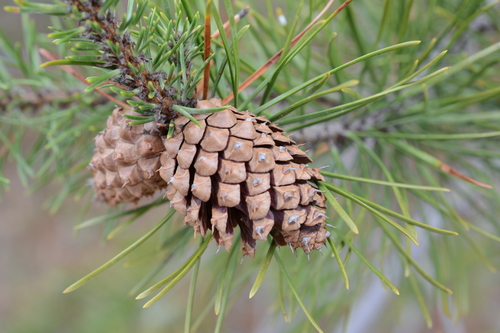
lodgepole pine
Pinus contorta
A symbol of western resilience, the lodgepole pine is more than just a tree—it is a bustling high-rise for forest wildlife. Whether standing tall in the mountains or twisted by coastal winds, it offers a fascinating glimpse into the endurance of nature.
Quick Identification
Size
Typically 12–40 meters (40–130 feet) tall, with a trunk diameter of 0.3–0.6 meters (1–2 feet).
Colors
Deep yellow-green needles; bark ranges from orange-brown to grey-black; cones are light brown and woody.
Key Features
- Needles bound in pairs (bundles of two)
- Asymmetric cones with a small prickle on each scale
- Tall, slender, and straight trunk in inland varieties
- Thin, flaky bark that lacks deep furrows
When You’ll See Them
Behavior
The lodgepole pine is a resilient "pioneer species," often the first tree to colonize an area after a wildfire or significant soil disturbance. Its life strategy is deeply tied to the elements; many subspecies produce serotinous cones, which are sealed shut by a tough resin. These cones can remain on the tree for decades, only opening to release their seeds when the intense heat of a fire melts the resin, allowing the tree to regenerate a forest from the ashes.
In a backyard or forest ecosystem, these trees act as vital structural hubs. They provide a dense canopy for nesting birds and thermal cover for mammals during harsh winters. While they don't "behave" in the animal sense, they exhibit a fascinating architectural plasticity—growing straight and narrow in crowded inland forests (hence the name "lodgepole") while taking on twisted, stunted shapes known as "krummholz" when exposed to harsh salt spray on the Pacific coast.
EverydayEarth exclusive
Camera Tips
When using an AI-powered camera like those from EverydayEarth, the lodgepole pine should be treated as the "main stage" for wildlife activity. Because these trees are frequently visited by squirrels, woodpeckers, and nuthatches, you should mount your camera approximately 5–8 feet up a neighboring tree or on a sturdy post facing a cluster of cones. Angle the camera slightly downward to capture the movement of small mammals scampering along the branches or birds landing to pry seeds from the cones.
For the best results, utilize time-lapse settings. A lodgepole pine changes slowly, but a photo taken every hour can capture the dramatic way the needles move with the wind or how the snow accumulates and sheds from the branches. If you are specifically looking for the wildlife that calls this tree home, set your trigger sensitivity to "high," as the darting movements of a chickadee or a pine squirrel can be easily missed. Ensure the camera is positioned to avoid direct lens flare from the sun filtering through the needles, which can wash out the deep greens of the foliage.
If you have a lodgepole pine in your backyard, consider placing a small bird feeder or a suet block near one of the lower branches within the camera's field of view. This encourages visitors to linger in the frame. During the autumn, pay close attention to the cones; as they dry or are worked over by wildlife, you'll capture incredible footage of the "harvesters" of the forest. Ensure your camera is set to record short video clips (15-30 seconds) rather than just stills to see the acrobatic way animals navigate the slender, flexible twigs.
Similar Species
Species that look similar or are commonly confused with lodgepole pine.
Frequently Asked Questions
Record lodgepole pine at your habitat
Connect a camera to start building your own species record — AI identifies every visitor automatically.