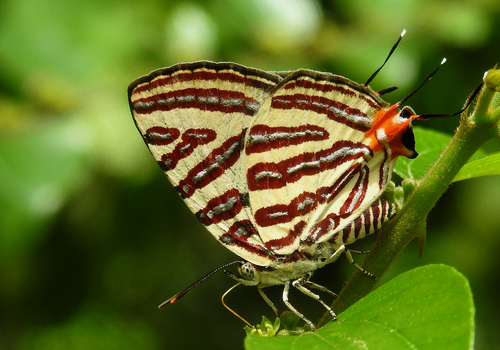
Long-banded Silverline
Cigaritis lohita
A shimmering jewel of the garden, the Long-banded Silverline dazzles with metallic markings and clever mimicry that protects it from the sharpest eyes.
Quick Identification
Size
Wingspan of 27–42 mm (1.1–1.6 inches)
Colors
Tawny orange underside with silver-centered reddish bands; males have iridescent violet-blue uppersides, while females are grayish-brown.
Key Features
- Two pairs of long, thread-like tails on each hindwing
- Continuous silver-centered bands across the underside of the wings
- Orange-ringed black eye-spots at the base of the tails
- Rapid, erratic flight pattern
- Distinctive 'false head' behavior when perched
When You’ll See Them
Behavior
These butterflies are extremely fast and jerky in flight, often disappearing from view only to reappear on a nearby leaf. They are also known for their fascinating symbiotic relationship with Crematogaster ants. The larvae produce sugary secretions that the ants crave, and in return, the ants provide a formidable defense against potential predators, sometimes even ushering the caterpillars into their nests for safety.
EverydayEarth exclusive
Camera Tips
Because they are fast fliers, set your camera to a high shutter speed or use a 'burst' mode triggered by motion. If you are using a trail camera, ensure it is positioned no more than 2 feet away from a target flower cluster. Since they often visit 'puddling' sites for minerals, you can create an artificial lure by placing a shallow tray of damp sand mixed with a tiny amount of sea salt in view of the camera. This will encourage them to land and stay still for much longer than they would on a flower.
Pay close attention to the lighting. The metallic scales on the wings reflect light beautifully, but midday sun can cause harsh glares. Positioning your camera so the sun is behind it or to the side will help the silver 'lines' shimmer in your photos without washing out the deep orange tones of the wings. If your camera allows for video, try to capture their tail-wiggling behavior, which is a hallmark of this species.
Similar Species
Species that look similar or are commonly confused with Long-banded Silverline.
Frequently Asked Questions
Record Long-banded Silverline at your habitat
Connect a camera to start building your own species record — AI identifies every visitor automatically.