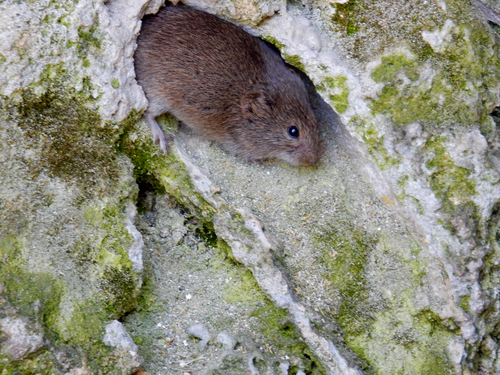
Long-tailed Vole
Microtus longicaudus
With a tail nearly as long as its body, the long-tailed vole is the mountain-climbing acrobat of the vole world. This hardy rodent thrives in the rugged terrain of western North America, from alpine meadows to misty forest floors.
Quick Identification
Size
Length: 17.5–22 cm (6.9–8.7 in); Tail: 6–10 cm (2.4–3.9 in); Weight: 35–65 g (1.2–2.3 oz)
Colors
Grizzled grayish-brown upper fur with pale gray to creamy white underparts; bicolored tail (dark on top, light below).
Key Features
- Tail length is 30-50% of the total body length
- Small, rounded ears mostly hidden in fur
- Grizzled gray-brown coat with lighter underbelly
- Noticeably longer tail than other Microtus species
When You’ll See Them
Geographic range
Where Does the Long-tailed Vole Live?
Native to the vast mountainous regions of western North America, the long-tailed vole thrives from eastern Alaska through western Canada and down into the western United States. Their territory stretches as far south as the mountains of Arizona and New Mexico, often favoring higher elevations in the southern parts of their range. They are particularly prevalent in the Rocky Mountains and the Sierra Nevada, where they inhabit moist alpine meadows and forest edges.
Basemap © OpenStreetMap contributors
Behavior
The long-tailed vole is a nimble and active rodent that, unlike many of its relatives, is quite comfortable climbing low shrubs and navigating rocky terrain. They are known for being less social than other vole species, often living in more solitary arrangements or small family units. While they do create runways through tall grass or under leaf litter, these paths are often less defined than those of the meadow vole.
These voles are active throughout the year, tunneling beneath the snow in winter to stay warm and forage on bark and dormant plants. In the backyard setting, they are shy and rarely seen by humans during the day, as they are primarily nocturnal or crepuscular. They play a vital role in the ecosystem as a primary food source for owls, hawks, and small carnivores like weasels.
EverydayEarth exclusive
Camera Tips
To capture the elusive long-tailed vole, placement is everything. Focus your camera on 'wilder' corners of your property, specifically where tall grass meets a tree line or near stone walls. Unlike common garden mice, these voles often travel along natural edges. Set your camera low—about 4 to 6 inches off the ground—and angle it slightly downward to capture the detail of their tail, which is the key to identifying them. Using a camera with a macro or close-focus lens is ideal, as these animals are small and detail is necessary for a positive ID.
Baiting can be very effective for attracting these small mammals. A small amount of birdseed, oats, or a smear of peanut butter on a rock or log in front of the lens will encourage them to pause long enough for a clear shot. If you are tracking them in winter, look for 'vent holes' in the snow crust and place your camera nearby, as they frequently emerge from the sub-nivian (under-snow) layer at these points to explore the surface.
Since they are active both day and night but peak during twilight, ensure your camera's infrared (IR) flash is functioning well. A fast trigger speed (under 0.5 seconds) is crucial, as they move in quick, darting bursts. If your camera supports video, short 10-second clips are often better than photos, as the movement of the tail and their climbing behavior are easier to distinguish in motion.
Similar Species
Species that look similar or are commonly confused with Long-tailed Vole.
Frequently Asked Questions
Record Long-tailed Vole at your habitat
Connect a camera to start building your own species record — AI identifies every visitor automatically.