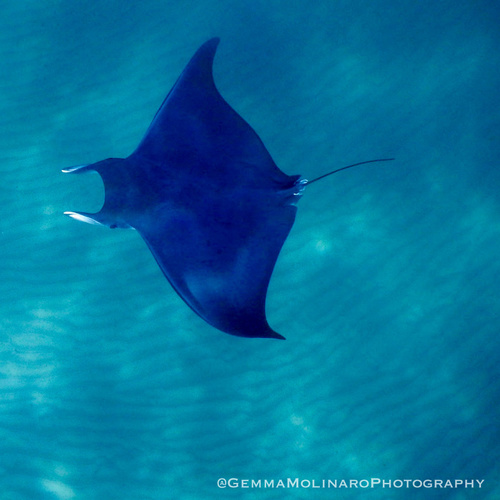
Longhorned Pygmy Devil Ray
Mobula eregoodoo
A miniature marvel of the Indo-Pacific, the Longhorned Pygmy Devil Ray is an acrobatic filter feeder that 'flies' through tropical waters. With its distinctive horns and graceful leaps, it remains one of the most charismatic sightings for coastal observers.
Quick Identification
Size
Disc width of 100–130 cm (3.3–4.3 ft); weight typically 30–50 kg (66–110 lbs)
Colors
Dark brown to grey-black dorsal side; stark white ventral side with occasional dark grey spots near the gill slits
Key Features
- Distinctive horn-like cephalic fins at the front of the head
- Broad, triangular pectoral fins with swept-back tips
- Long, thin tail without a stinging spine
- Small body size compared to giant manta rays
When You’ll See Them
Geographic range
Where Does the Longhorned Pygmy Devil Ray Live?
The Longhorned Pygmy Devil Ray is native to the tropical and subtropical waters of the Indo-West Pacific. Its range extends from the Red Sea and East Africa across the Indian Ocean to Southeast Asia, reaching as far north as the Philippines and as far south as northern Australia. While they are primarily coastal residents, they are often found near offshore islands and deep-water reef drop-offs where currents bring an abundance of plankton.
Basemap © OpenStreetMap contributors
Behavior
The Longhorned Pygmy Devil Ray is a highly social and energetic marine species, often observed in small to medium-sized schools. Unlike many other rays that spend their time on the seafloor, this species is pelagic, meaning it spends most of its life swimming in the open water column. They are famous for their acrobatic breaches, where they leap several feet out of the water, a behavior thought to be related to communication, parasite removal, or simply social play.
These rays are gentle filter feeders, utilizing their specialized 'horns' (cephalic fins) to direct water into their mouths. They are generally shy around humans and will quickly swim away if startled by aggressive movements or loud boat engines. However, in protected marine areas, they have been known to glide curiously past divers and snorkelers, displaying a graceful, bird-like swimming motion.
EverydayEarth exclusive
Camera Tips
For those lucky enough to have a 'backyard' that meets the ocean, capturing a Longhorned Pygmy Devil Ray requires an underwater housing or a specialized marine trail camera. The best placement is on a dock piling or a weighted tripod set near the edge of a reef flat or a known 'cleaning station' where rays gather. Position the camera at a slight upward angle; this captures the white underside and the unique silhouette of the cephalic fins against the surface light.
Because these rays are fast and move with the current, use a high frame rate (60 fps or higher) to ensure the footage isn't blurry. Since motion sensors can be unreliable underwater due to floating debris, use a time-lapse setting or a 'detect-and-record' AI feature if your camera supports underwater computer vision. Set the interval to capture a shot every 2 to 5 seconds during the two hours surrounding high tide, which is when these rays are most likely to enter shallow coastal areas.
Natural lighting is your best friend. In the shallow depths where this species resides, sunlight provides the best color accuracy for their dark dorsal patterns. If you are filming in deeper water or under a dock, avoid using a direct flash, as it will often reflect off 'sea snow' (suspended particles) and obscure the ray. Instead, rely on high-quality wide-angle lenses to capture their full wingspan as they glide through the frame.
Similar Species
Species that look similar or are commonly confused with Longhorned Pygmy Devil Ray.
Frequently Asked Questions
Record Longhorned Pygmy Devil Ray at your habitat
Connect a camera to start building your own species record — AI identifies every visitor automatically.