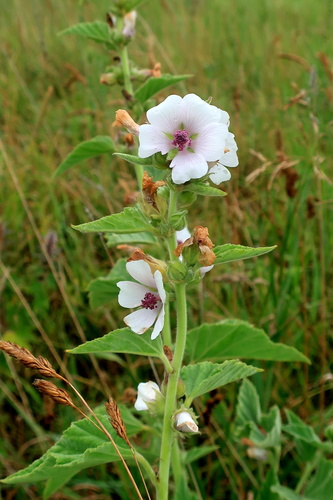
marsh mallow
Althaea officinalis
More than just the namesake of a campfire treat, the marsh mallow is a stunning wetland perennial with velvety leaves and delicate pink blooms. Discover how this historic herb brings both elegance and a host of pollinators to your garden's dampest spaces.
Quick Identification
Size
Height: 3–4 feet (90–120 cm); Spread: 1.5–2.5 feet (45–75 cm)
Colors
Pale pink to nearly white petals; dark purple or reddish-magenta anthers; grayish-green velvety foliage
Key Features
- Soft, velvety heart-shaped leaves with a fine downy covering
- Tall, upright woody stems that do not require staking
- Five-petaled flowers measuring 1-2 inches across
- Grows in clumps in damp, marshy, or coastal soils
When You’ll See Them
Behavior
As the summer heat peaks, the plant produces beautiful, delicate flowers that open sequentially from the bottom of the stalk upward. This staggered blooming strategy ensures a long-term food source for local insects. While humans historically used the mucilaginous roots to create the original marshmallow treats, the plant is now primarily appreciated for its ornamental beauty and its ability to thrive in 'problem' areas of the yard where the soil stays consistently wet.
EverydayEarth exclusive
Camera Tips
If you are looking to capture the wildlife attracted to the plant, focus your camera on a specific cluster of buds just before they open in the morning. Using a high-speed trigger or a motion-activated 'macro' setting is ideal here. Marsh mallows are magnets for bumblebees, hoverflies, and swallowtail butterflies; set your camera to a fast shutter speed (at least 1/1000s) to freeze the motion of their wings as they visit the nectar-rich blooms.
Lighting is crucial for this species due to its pale, highly reflective petals. Avoid direct midday sun, which can wash out the soft pink hues and create harsh shadows on the velvety leaves. Early morning or 'golden hour' light is best, as it highlights the silver-green downy texture of the foliage and stems. If your camera has a macro setting, use it to capture the striking contrast of the dark purple stamens against the pale petals.
For those interested in the plant's growth cycle, a season-long time-lapse is a rewarding project. Place the camera in a waterproof housing facing a damp corner of your yard where the marsh mallow is planted. By taking one photo every 4-6 hours from May through September, you can witness the incredible transformation from a small green shoot into a towering, flowering spire. Ensure the camera is anchored securely, as these plants often grow in soft, muddy soil that may shift after heavy summer rainstorms.
Similar Species
Species that look similar or are commonly confused with marsh mallow.
Frequently Asked Questions
Record marsh mallow at your habitat
Connect a camera to start building your own species record — AI identifies every visitor automatically.