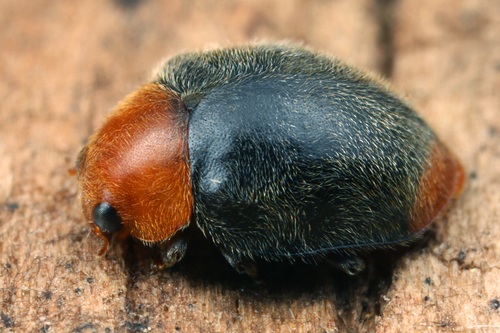
Mealybug Destroyer
Cryptolaemus montrouzieri
The Mealybug Destroyer is the garden's ultimate secret agent, using a brilliant 'wolf in sheep's clothing' disguise to infiltrate pest colonies and protect your plants.
Quick Identification
Size
Adults are 3–4 mm (1/8 inch) long; larvae can reach up to 10 mm (3/8 inch).
Colors
Adults have a dark brown to black body with a distinctive reddish-orange head and a reddish-orange patch at the tip of the wing covers. Larvae are covered in white, waxy filaments.
Key Features
- Dark oval body with orange head and 'tail'
- Larvae look like large, shaggy mealybugs
- Rapid, jerky movement when hunting
- Absence of spots common on other ladybirds
When You’ll See Them
Behavior
The Mealybug Destroyer is a specialized predator that acts as a natural pest control officer in the garden. Native to Australia but introduced globally, these beetles are famous for their voracious appetite for mealybugs and soft scale insects. They are highly active during the day, particularly when the sun is shining, as they rely on visual cues and chemical signals from plants to find their prey.
The most fascinating aspect of their behavior is the larval stage's 'wolf in sheep's clothing' strategy. To avoid being attacked by ants—which 'farm' mealybugs for their sweet honeydew—the Mealybug Destroyer larvae grow long, white, waxy tufts. This camouflage allows them to blend in perfectly with a mealybug colony, moving among their prey and eating them undetected by the protective ants.
EverydayEarth exclusive
Camera Tips
To capture the Mealybug Destroyer on camera, you need to think small. Because of their tiny size, standard backyard trail cameras may struggle with focus. We recommend using a dedicated macro lens or an AI-powered insect camera positioned within 4 to 8 inches of the target plant. Look for 'hotspots' on your plants—areas with white, cottony clusters on the stems or the undersides of leaves. This is where the Mealybug Destroyer will spend 90% of its time.
Lighting is critical for clear identification. Position your camera so the sun illuminates the plant surface without creating harsh shadows. If you are using a triggered camera, set the sensitivity to high and use a 'burst' mode. These beetles are surprisingly fast when they move between leaf junctions, and a single photo might miss the orange head that distinguishes them from common pests.
For the best video footage, target the larvae. Their slow, undulating movement as they hunt through a mealybug colony makes for fascinating viewing. Set your camera to a high frame rate (60fps) if possible. If you are trying to attract them to your camera's field of view, avoid using any broad-spectrum insecticides in your yard, as these beneficial beetles are the first to be affected by chemical treatments. Patience is key; if you see ants climbing a plant, there is likely a food source nearby that will eventually attract a Destroyer.
Similar Species
Species that look similar or are commonly confused with Mealybug Destroyer.
Frequently Asked Questions
Record Mealybug Destroyer at your habitat
Connect a camera to start building your own species record — AI identifies every visitor automatically.