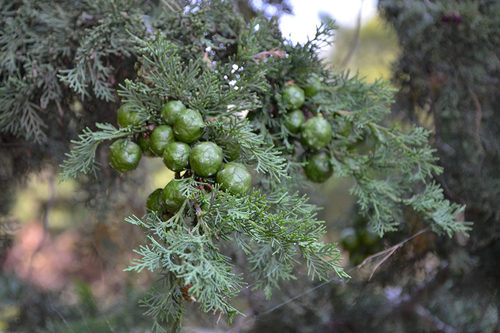
Mediterranean cypress
Cupressus sempervirens
The Mediterranean cypress is a living pillar of history, known for its iconic slender shape and its ability to thrive in the toughest conditions. A sanctuary for songbirds and a staple of classical garden design, this evergreen adds a touch of the ancient world to any modern backyard.
Quick Identification
Size
Height: 20–35 m (66–115 ft); Spread: 1–1.5 m (3–5 ft) for the narrow 'stricta' variety
Colors
Dark emerald green to dull olive foliage; grey-brown bark with thin vertical fissures
Key Features
- Distinctive tall, slender, columnar silhouette
- Small, scale-like leaves in dense, fan-shaped sprays
- Round woody seed cones 2.5–4 cm (1–1.5 in) long
- Resinous, fragrant evergreen needles
When You’ll See Them
Behavior
The Mediterranean cypress is a long-lived evergreen that serves as a cornerstone of the landscape. Unlike many other conifers that spread wide, the most common cultivated variety of this species grows in a tight, skyward-pointing pillar. It is incredibly resilient, having evolved to withstand the intense heat and dry summers of the Mediterranean basin. Its dense foliage is almost impenetrable to wind, making it a favorite nesting site for small birds seeking protection from the elements.
In a backyard setting, these trees function as vertical landmarks. They don't move or migrate, but they react dynamically to the seasons. In spring, male cones may release clouds of yellow pollen that look like smoke when caught in a breeze. Because they are fire-resistant and act as natural windbreaks, they are often planted in rows to protect homes and gardens. They also have a deep cultural history, often associated with mourning in some cultures and immortality or beauty in others.
EverydayEarth exclusive
Camera Tips
When photographing a Mediterranean cypress with your AI camera, the primary challenge is the scale. To capture the full majesty of its 'pencil' shape, place your camera at ground level at least 20 feet away from the base, angled slightly upward. This creates a dramatic perspective that emphasizes its height. If you are using a trail camera to monitor growth or seasonal changes, ensure the camera is mounted on a sturdy post or a different tree to prevent the 'sway' that can occur if the cypress itself is caught in high winds.
For those interested in the wildlife that uses the cypress as a home, mount your camera directly to the trunk about 5 feet up, facing a nearby bird bath or feeder. The tree’s dense scales make it a popular 'staging area' where birds like finches, tits, and sparrows will land to check for predators before flying to a feeder. By positioning the camera to catch these transition zones, you’ll get clear, still shots of birds perched against the dark green foliage.
Lighting is crucial for this species. Because the foliage is so dark and dense, it can appear as a black silhouette in low light. Position your camera facing North or South to ensure the tree is side-lit during the golden hours of sunrise and sunset; this will highlight the texture of the bark and the individual scales of the leaves. Avoid pointing the camera directly into the sun (East or West) unless you are specifically aiming for a silhouette shot.
If you have an AI camera with time-lapse capabilities, the Mediterranean cypress is an excellent subject. Setting a capture once every hour can reveal how the tree interacts with the light throughout the day, or setting it once a week over a year can show the subtle maturation of the woody cones from green to brown. This is also the best way to capture the 'pollen smoke' events that occur in early spring during windy days.
Similar Species
Species that look similar or are commonly confused with Mediterranean cypress.
Frequently Asked Questions
Record Mediterranean cypress at your habitat
Connect a camera to start building your own species record — AI identifies every visitor automatically.