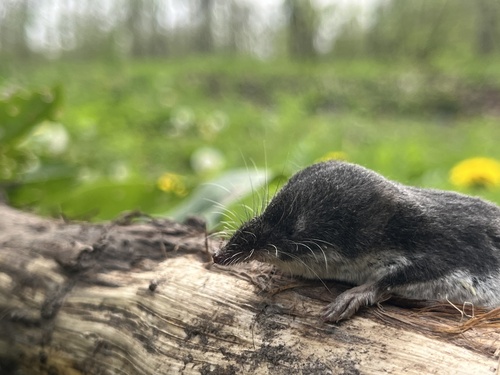
Mediterranean Water Shrew
Neomys milleri
A pint-sized predator of the water's edge, the Mediterranean Water Shrew is a master of the damp shadows. With its velvet-black coat and silver belly, this energetic hunter brings high-speed drama to riverbanks and garden ponds across Europe.
Quick Identification
Size
Head and body length: 70–95 mm (2.8–3.7 in); Tail: 40–65 mm (1.6–2.6 in); Weight: 9–18 g (0.3–0.6 oz)
Colors
Bicolored with velvety black or dark slate-gray upperparts and a sharply contrasting silvery-white or pale gray underside.
Key Features
- Distinct 'tide mark' separation between dark back and white belly
- Red-tipped teeth characteristic of red-toothed shrews
- Short, stiff hairs on the tail underside (less prominent than in Eurasian species)
- Pointed, highly mobile snout with long tactile whiskers
When You’ll See Them
Geographic range
Where Does the Mediterranean Water Shrew Live?
The Mediterranean Water Shrew is native to the southern and central regions of Europe and parts of Western Asia. It is commonly found across a range extending from the Iberian Peninsula through the Mediterranean basin into the Balkans, Turkey, and as far north as Poland and Belarus. This species typically follows river systems and humid corridors, avoiding the most arid Mediterranean zones in favor of reliable moisture.
Basemap © OpenStreetMap contributors
Behavior
The Mediterranean Water Shrew is a high-energy, semi-aquatic mammal that lives life at a frantic pace. Because of its exceptionally high metabolic rate, it must consume nearly its own body weight in food every day, leading to a lifestyle of near-constant foraging. While it is a capable swimmer and diver, it is generally less specialized for water than its close relatives, often spending a significant portion of its time hunting in damp leaf litter or through subterranean tunnels near the water's edge.
Solitary and fiercely territorial, these shrews use scent marking to define their home ranges. They are known for their 'short-circuit' activity cycle, alternating between intense bursts of hunting and short naps every few hours, regardless of whether it is day or night. Although they are small, they are surprisingly bold predators, sometimes tackling prey larger than themselves by using mildly toxic saliva to incapacitate victims like frogs or large insects.
EverydayEarth exclusive
Camera Tips
Capturing a Mediterranean Water Shrew on a trail camera requires a specialized setup due to their diminutive size and rapid movements. You should place your camera at a 'micro' height, no more than 10–15 centimeters (4-6 inches) off the ground. The best locations are 'funnel points' along water edges, such as gaps between rocks on a stream bank, holes in a retaining wall, or a narrow path through thick bankside sedges. Because they move so quickly, a standard photo trigger often results in a 'ghost' image or a blank frame; always use video mode with the shortest possible trigger interval.
To encourage a shrew to pause in front of the lens, use a scent-based lure. A small amount of fish-based wet cat food or a cotton ball soaked in sardine oil works exceptionally well. Place the bait inside a small, ventilated container or a wire mesh cage to prevent the shrew from dragging it away immediately. Position this bait in a small clearing or against a flat rock to provide a clean background that helps the camera's focus lock onto the subject rather than the surrounding grass.
Lighting is a major challenge for close-up shrew photography. Most trail cameras have infrared flashes that are too powerful for subjects just 30 centimeters away, leading to 'white-out' images. You can remedy this by placing a piece of semi-opaque tape or a small strip of paper over part of the IR LED array to diffuse the light. If your camera settings allow, choose a high frame rate (60fps) to help capture their jerky, fast-paced behavior in smooth detail. Seasonally, late spring and early summer are the best times for sightings, as the shrews are most active and juveniles are beginning to disperse.
Similar Species
Species that look similar or are commonly confused with Mediterranean Water Shrew.
Eurasian Water Shrew
Larger in size with much more prominent silver hair fringes on the feet and tail, acting as paddles for more frequent swimming.
Common Shrew
Lacks the stark black-and-white bicolored coat; the Common Shrew is typically tricolored (dark brown, light brown, and pale) and is strictly terrestrial.
Frequently Asked Questions
Record Mediterranean Water Shrew at your habitat
Connect a camera to start building your own species record — AI identifies every visitor automatically.