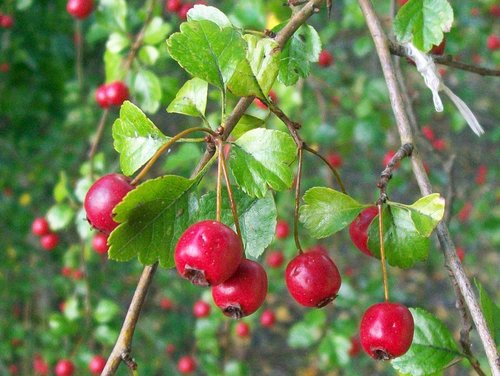
midland hawthorn
Crataegus laevigata
Often called the Mayflower, the Midland hawthorn is a stunning woodland sentinel known for its fragrant spring blossoms and protective, thorny canopy. It is a vital sanctuary for birds and a favorite for backyard observers looking to spot rare forest-dwelling species.
Quick Identification
Size
Height: 5-12 meters (16-40 feet); Spread: 4-8 meters (13-26 feet)
Colors
Glossy dark green leaves; creamy white to pale pink blossoms; deep red berry-like fruits (haws)
Key Features
- Leaves with 3-5 shallow, rounded lobes
- Flowers featuring 2 or 3 styles (pistils)
- Fruits (haws) containing 2 seeds
- Dense, thorny branches with greyish-brown bark
When You’ll See Them
Loading activity data...
Behavior
The Midland hawthorn is a slow-growing, long-lived deciduous tree that functions as a cornerstone of the woodland ecosystem. Unlike its cousin, the common hawthorn, this species prefers the dappled light of ancient forest floors and shady hedgerows. It is often the first sign of true spring in the landscape, exploding into a dense cloud of white or blush-pink blossoms that emit a heavy, sweet fragrance designed to attract hoverflies and bees.
As the seasons progress, the tree becomes a hub of social interaction for wildlife. In the summer, its dense, thorny canopy provides a nearly impenetrable fortress for nesting birds like long-tailed tits and greenfinches, protecting them from larger predators. By autumn, the tree is laden with 'haws'—small, red, nutrient-dense fruits that serve as a critical energy source for migrating birds and resident small mammals.
EverydayEarth exclusive
Camera Tips
To capture the best action on a Midland hawthorn, don't just point your camera at the trunk; focus on the 'fruit zones.' During the autumn months, position your AI camera 4–6 feet away from a cluster of red haws, ideally at a slight upward angle. This will trigger the camera when thrushes, fieldfares, and waxwings land to feast. Use a high shutter speed if your camera allows, as bird movements while feeding are incredibly fast.
If you are interested in the pollinators that flock to the 'Mayflower' blossoms, mount your camera on a nearby branch or a dedicated tripod within two feet of a flowering cluster. Setting your camera to a 'Photo Burst' or 'High Sensitivity' mode will help capture the rapid arrival of various bee species and the distinctive hoverflies that prefer this tree. Early morning light (6-9 AM) provides the most natural color for the delicate pink-white petals without washing out the details in harsh midday sun.
For those looking to catch nocturnal visitors, place a camera near the base of an older Midland hawthorn. Many small mammals, such as wood mice and bank voles, scavenge for fallen haws and insects in the leaf litter beneath the tree. Ensure your infrared (IR) flash is enabled but consider masking the LEDs slightly with a piece of tape if the bark is very reflective, which can sometimes overexpose the foreground in night shots.
Lastly, consider a long-term time-lapse project. The Midland hawthorn is famous for its dramatic seasonal shifts. By securing a weather-proof housing to a permanent post and taking one photo every day at noon, you can create a stunning visual record of the tree's transition from skeletal winter thorns to the 'frothy' bloom of May and finally to the ruby-red harvest of October.
Similar Species
Species that look similar or are commonly confused with midland hawthorn.
Frequently Asked Questions
Record midland hawthorn at your habitat
Connect a camera to start building your own species record — AI identifies every visitor automatically.